
Fruit and Nut Plants from around the world
Check out our Papaya Seed Page for
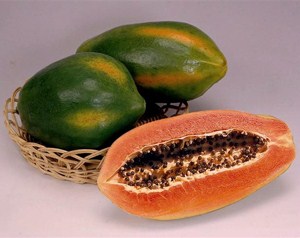
Papaya ( carica ) varieties from around the world
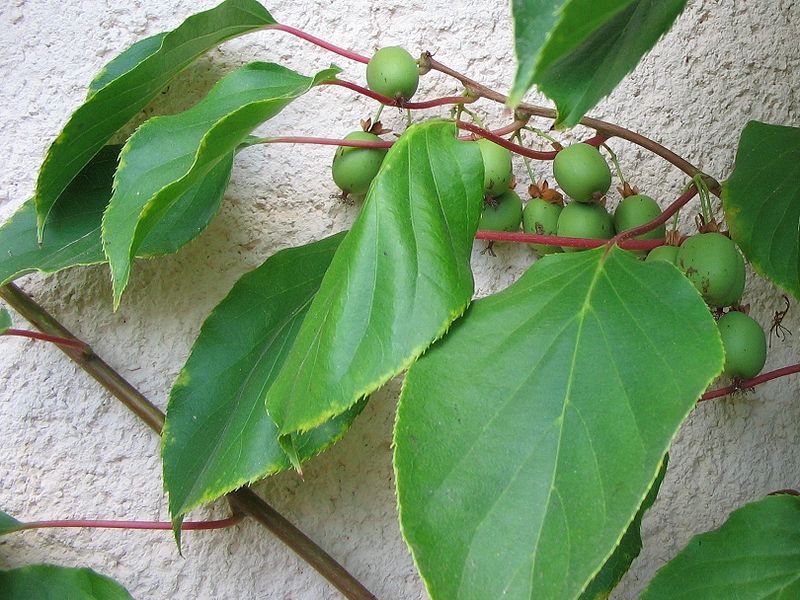
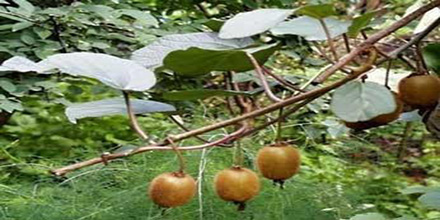
Kiwis require special training and pruning to produce good crops. When planted, the vines should be pruned back to 4 or 5 buds. From these a main stem should be selected and staked to grow to the top of the arbor or trellis, usually 6-7’ high. The trellis should be strong to support the heavy future fruit loads.
Kiwis are beautiful vines. Their vigorous spring growth is a spectacular sight. Excellent for a privacy screen, they will rapidly cover a fence and with support will cover a wall or steep slope. Kiwis grow in a manner similar to grapes but more rapidly. They are very high in Vitamin C. (Ten times as much as lemons.) They are excellent for eating fresh and are a tasty addition to salads and desserts. Ice cream, pies, jam and wine are other ways to use kiwis.
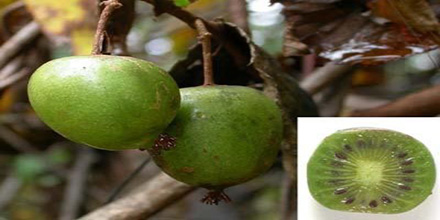
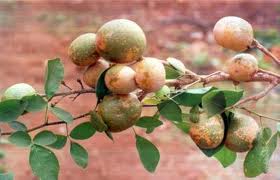
The tree grows wild in dry forests on hills and plains of central and southern India and Burma, Pakistan and Bangladesh, also in mixed deciduous and dry dipterocarp forests of former French Indochina. Mention has been found in writings dating back to 800 B.C. It is cultivated throughout India, mainly in temple gardens, because of its status as a sacred tree; also in and northern Malaya, the drier areas of Java, and to a limited extent on northern Luzon in the Philippine Islands where it first fruited in 1914. It is grown in some Egyptian gardens, and in Surinam and Trinidad.
The tree has no exacting cultural requirements, doing well with a minimum of fertilizer and irrigation. The spacing in orchards is 25 to 30 ft (6-9 m) between trees. Seedlings begin to bear in 6 to 7 years, vegetatively propagated trees in 5 years. Full production is reached in 15 years.
Normally, the fruit is harvested when yellowish-green and kept for 8 days while it loses its green tint. Then the stem readily separates from the fruit.
A tree may yield as many as 800 fruits in a season but an average crop is 150 to 200, or, in the better cultivars, up to 400.
Bael fruits may be cut in half, or the soft types broken open, and the pulp, dressed with palm sugar, eaten for breakfast, as is a common practice in Indonesia. The pulp is often processed as nectar or "squash" (diluted nectar). A popular drink (called "sherbet" in India) is made by beating the seeded pulp together with milk and sugar. A beverage is also made by combining bael fruit pulp with that of tamarind. These drinks are consumed perhaps less as food or refreshment than for their medicinal effects.
The young leaves and shoots are eaten as a vegetable in Thailand and used to season food in Indonesia. They are said to reduce the appetite. An infusion of the flowers is a cooling drink.
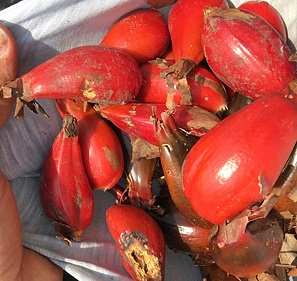
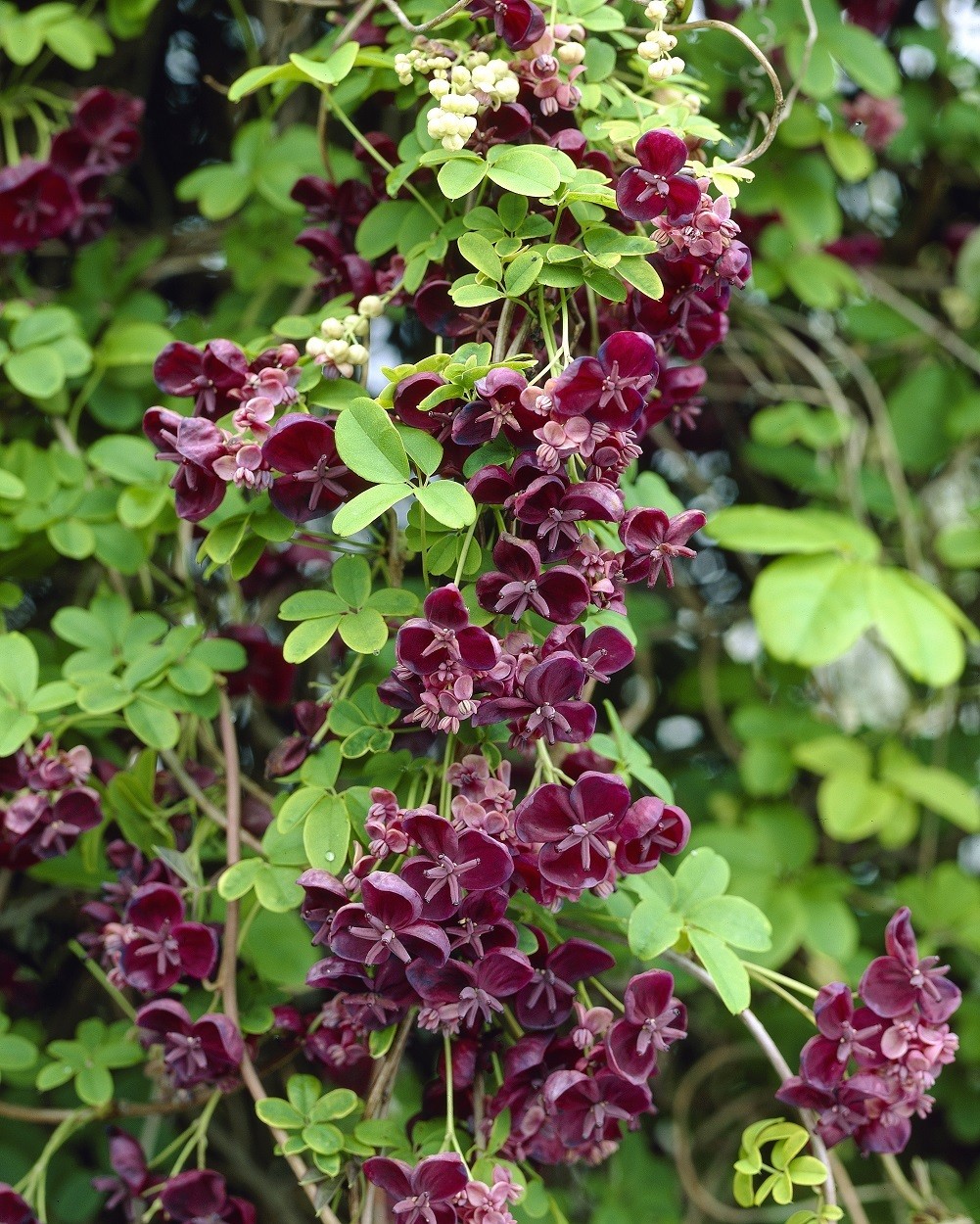
Very interesting edible fruits, resembling a sausage in shape and reaching 4-5" long. May be grown in full sun or partial shade. All Akebia species retain their attractive leaves through most of the winter, are excellent for growing on walls, fences, trellis.
Best planted in a sheltered position. It can be trained up various kinds of garden supports, or alternatively, allowed to climb up a tree. Hardy to 24 degrees.
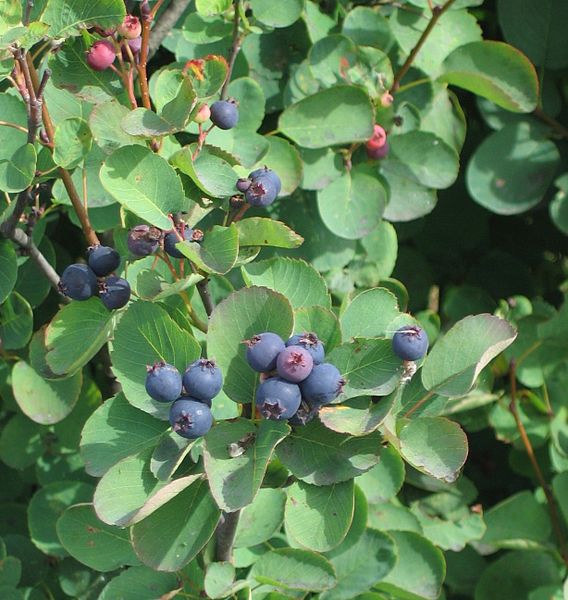
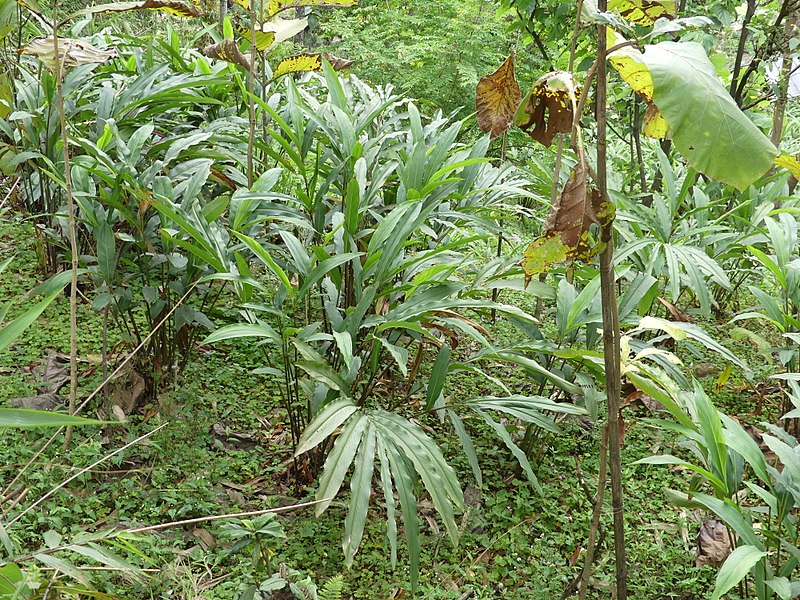
It is a culinary herb that is used in Chinese, Vietnamese and Indian cooking. Vikings are said to have taken the spice to Scandinavia where it is used in baking breads and pastries still to this day. In the Arabic culture, Cardamom is used to flavor coffees and teas. The flavor of Black Cardamom is said to be a dark, smoky flavor with a taste of camphor and mint.
The Cardamom spice is found in the dried seedpods and seeds. The small, brown-black sticky seeds are contained in pods which are collected just before maturity. Keep the Cardamom seed in its seedpods as husked seed and ground seed loses its flavor quickly. Always store it in an airtight container.
Black Cardamom herb was used in Chinese medicine as a medicinal herb. It was said to treat stomach ailments and malaria. Cardamom is rich in vitamins and minerals. The essential oil is used as an antiseptic and local anesthetic.
Black cardamom pods can be used in soups, chowders, casseroles, and marinades for smoky flavor, much in the way bacon is used.
The green cardamom, with smoother, lighter colored pods, and more familiar to westerners, is produced by the plant Elettaria cardamomum. Amomum subulatum is also a great ornamental, suitable to all mild and warm temperate climates that do not experience excessive freezes.
For zones 9-10 outside, it can be container grown in large tubs inside.
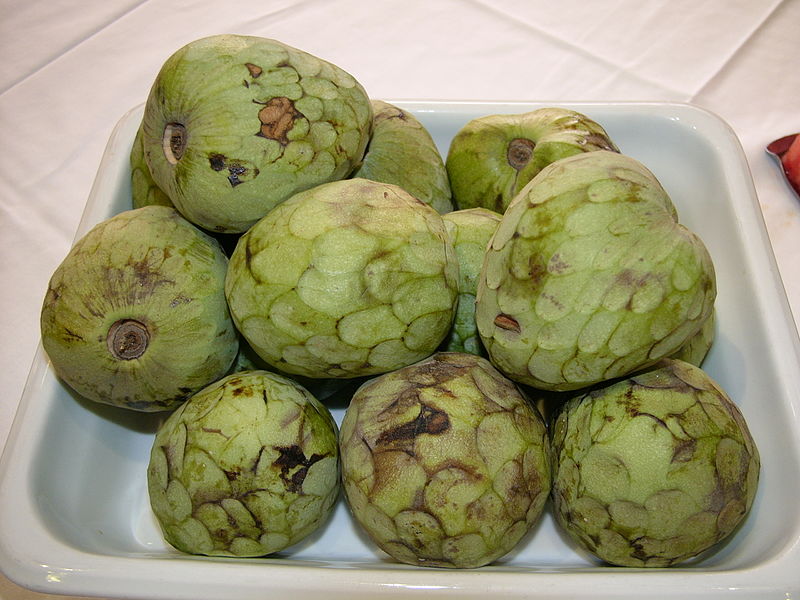
The cherimoya is subtropical or mild-temperate and will tolerate light frosts. Young growing tips are killed at 29°F and and mature trees are killed or severely injured at 25°F. If cherimoyas do not receive enough chilling, the trees will go dormant slowly and then experience delayed foliation. The amount of chilling needed is estimated to be between 50 and 100 hours. The tree grows well in the coastal and foothill areas of southern California.
The compound fruit is conical or somewhat heart-shaped, 4 to 8 inches long and up to 4 inches in width, weighing on the average 5-1/2 to 18 ounces, but the largest fruits may reach 5 pounds in weight.
The sweet, juicy, white flesh is melting, subacid and very fragrant. The fruit turns a pale green or creamy yellow color as they reach maturity. They should be picked when still firm and allowed to soften at room temperature. Ripe fruit will give to soft pressure. Overripe fruit will be dark brown. Fruit left on the tree too long will usually crack or split and begin to decay. The fruit should be clipped rather than pulled from the tree. Cut the stem close to the fruit so it won't puncture other fruit during storage.
Store mature fruit above 55°F to prevent chilling injury to the skin and flesh. Ripe fruit will deteriorate quickly but can be stored at temperatures lower than 55°F for short periods. Ripe cherimoyas can be frozen and eaten like ice cream. Cherimoyas are best served chilled, cut in half or quartered and eaten with a spoon. The fruit can also be juiced or used to make delicious sorbets or milkshakes.
Easily grown container plant, or zone 10 outside.
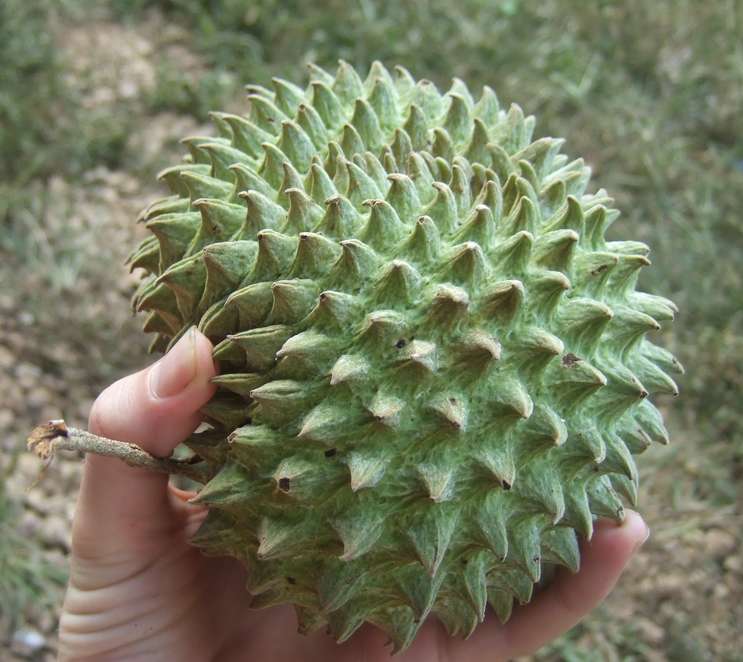
Sancoya is an edible fruit and medicinal plant in the Annonaceae family. It is native to Mexico, Central America, and parts of South America. Its common names include soncoya, ilama, and cabeza de negro. It has hairy leaves and large, strong-scented flowers. The fruit is rounded and 15 to 20 centimeters wide, and is covered with a felt-textured brown skin. The surface of the fruit has hooklike projections. The pulp is similar in scent, appearance, and taste to that of the mango. It has many seeds.
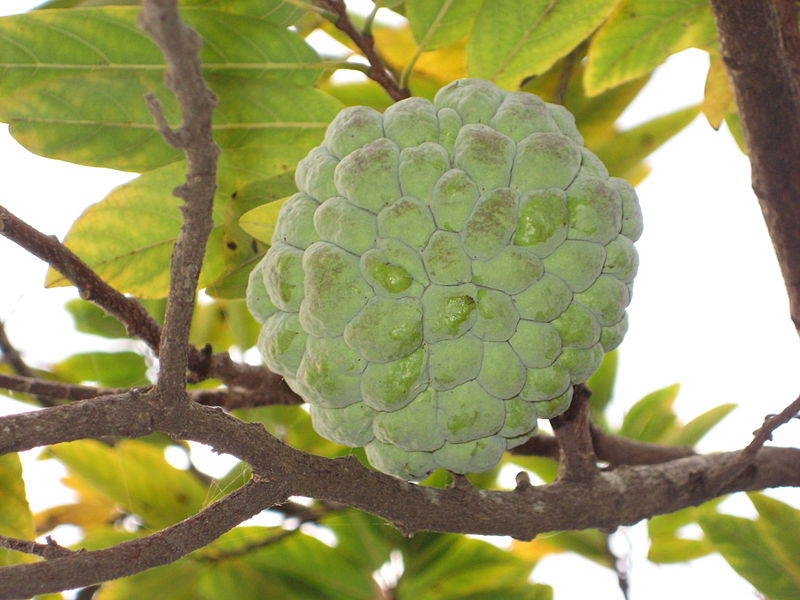
A small (2-4"), knobby fruit with soft, creamy white flesh often having a minty or custardy flavor. The sugar apple is extremely popular throughout the tropics, especially in climates where the cherimoya can not be grown.
Sugar Apple is relatively carefree. Being a tropical fruit tree, it'll reward you handsomely if properly watered and provided with enough light, warmth and humidity, together with a monthly feed. After harvesting of fruits, prune back long branches and thin its center of unsightly twigs. Check occasionally for mealy bugs and caterpillars.
Easily grown container plant, or zone 10 outside.
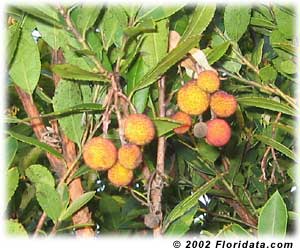
The strawberry tree produces masses of beautiful white flowers followed by small fruits. Since the fruit takes 12 months to ripen, the tree carries both mature fruit and flowers at the same time and is then incredibly beautiful. This is a superb plant to grow as a specimen in a lawn, and it also grows very well on the sunny edges of a woodland garden.
Best grown in a rich, well draining soil for best results, though it will grow to some degree in most type soils, except for water-logged soils. Does well in full sun or partial shade.
The small strawberry shaped fruits ( hence the name )have gritty skin and must be fully ripe to be eaten. It has a sweet, delicate flavor that some people love, and others do not care for. The fruit can also be made into wine and is used to make delicious jams and preserves.
Grow this shrub in USDA Zones 7-10. It originally comes from western Europe and the Mediterranean region.
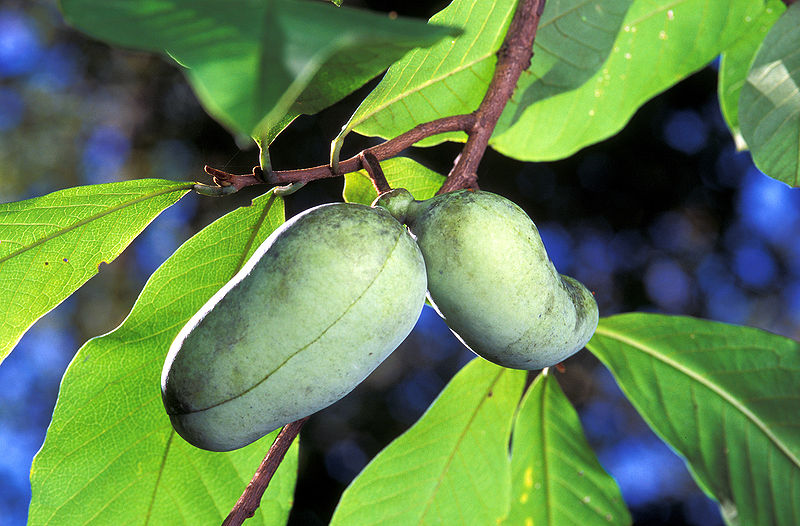
It is higher in protein, fiber, and carbohydrate. It has a much higher content of amino acids in a good balance. It has mainly unsaturated fatty acids, and is a good source of linoleic and linolenic acids. It is a small tree, seldom taller than 25 feet. Grown in full sun, the pawpaw tree develops a narrowly pyramidal shape with dense, drooping foliage down to the ground level. In the shade it has a more open branching habit with few lower limbs and horizontally held leaves. Pawpaw trees require warm to hot summers, mild to cold winters, and a minimum of 32 inches (81 cm) of rainfall spread rather evenly throughout the year, with the majority falling in spring and summer. It can be grown successfully in USDA plant hardiness zones 5 (-15 F/-26 C min. temp.) through 8 (15 F/-9 C min. temp.)
Shading for the first year, and sometimes the second, is normally required outside, and it is for this reason that pawpaws are almost always found in nature as an understory tree. Although the pawpaw is capable of fruiting in the shade, optimum fruit yields are obtained in open exposure, with some protection from wind (on account of the large leaves). Plant at least two trees for fruit production, to ensure cross-pollination. The soil should be slightly acid (pH 5.5-7), deep, fertile, and well-drained. Good drainage is essential to success. Pawpaws will not thrive in heavy soil or waterlogged soil. In its native habitat the pawpaw has few pests of any importance.
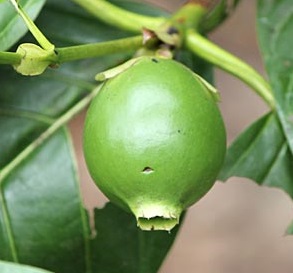
The Borojo Tree is cultivated for its fruits rich in calcium. They have 7-12 cm in diameter and their color is green. The pulp of these fruits is acid and very dense. It is also brown. Each fruit contains hundreds of seeds. They are ready to consume when they fall off the branches. The uses of the Borojo fruits vary from juice, ice cream, capsules and jelly.
The trunk of the tree is small and sometimes separated in two or three smaller trunks. The trunk is grey-brown and harsh. The tree is an evergreen. The foliage is dark green and the leaves have a smooth texture.
Hardiness zones 10-11. The Borojo Tree can resist small periods of frost and even floods. It needs an average temperature of 28°C. Easily grown in warm greenhouses in cooler climates.
The tree enjoys moderate light. It requires good watering, don't let the soil dry out. You may fertilize monthly with a balanced fertilizer.
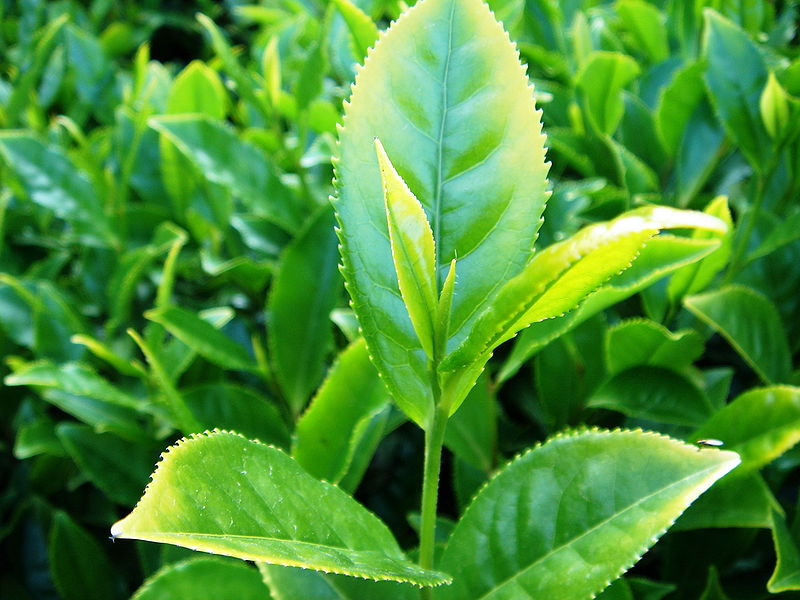
This is the tea produced commercially around the world. The tender, young leaves are used in the process of tea production.
Can be grown in tubs inside, or in cool greenhouses, outdoors in warm climates. Prefers moist, well drained, humus rich, slightly acidic ( 5.5-6.5 )soil. We recommend maintaining a 2-3 inch deep mulch of shredded bark or leaves around base of plant.
Hardy to zone 8, can be grown in zone 7 with protection. To make green tea, pick only the top 3 leaves from new growing tips, spread and dry in the shade for 6-8 hours, then in an open pot, heat ( simmer ) the leaves, stirring frequently for about an hour.
Click here for an informative site on growing and making your own tea. For black tea, you must ferment the leaves. USDA Zones 8 to 11.
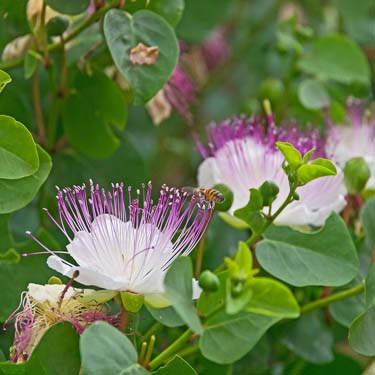
A slow growing shrub of dry, rocky areas of the Mediterranean and North Africa. For best results, freeze seeds in moist sand for 2 weeks, then sow and keep moist and dark until germination.
Hardy to Zone 10 and higher for outdoors.
Full sun, grows to 8' in container, minimum temperature 50°F, blooms in spring. Germination about 75%.
Note: These seeds need to be cold statified before
sowing.
We recommend using the Seedman's Cold Stratification
Kits for cold stratification.
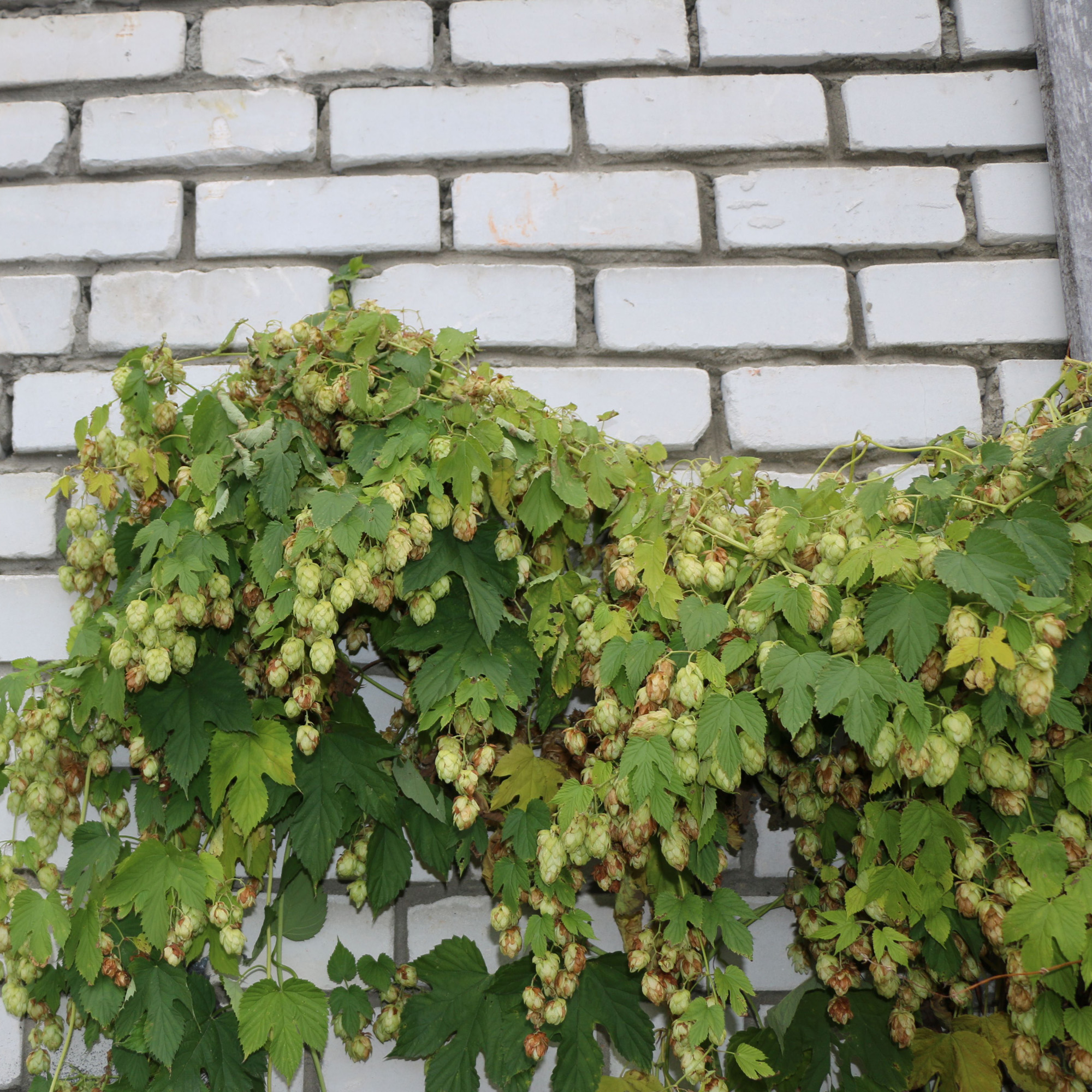
Hops produce rich, heavily scented, green-golden fruit that is harvested in autumn. The flowers of Humulus lupulus contain the chemicals myrcene, myrcenol, resin, linalool, humulene and tannins, all used extensively in the pharmaceutical industy. Also, another common usage is flavoring for the beer industry.
Hops seeds can be slow to germinate. Use a process called "cold scarification" to encourage hop seed germination. A good method is to put seeds in an equal amount of moist sand and refrigerate from one to three months at about 41 degrees F. After that, plant the seeds at 68 degrees F. for one to two months. If the hops seeds have not germinated, put them back in the refrigerator and repeat the cycle. Decorative fast
growing vine, excellent for porches and screens.
And what is highly unusual for fruits, they are rich in essential fatty acids. This combination of protective, healing and nutritive constituents help explain the many benefits of this plant. It is traditionally used to treat diabetes, anemia, heart disease, impotency, abnormal menstuation, menopause and problems of the liver and kidneys. It reduces cholesterol, helps regulate blood pressure, and improves circulation. Black gojiberry is a spiny shrub found in dry areas from Turkey and Armenia to Tibet and northwestern China. It does well in dry, well-drained soils, and requires full sun. The seeds germinate readily but the seedlings are susceptible to damping off and control of damping off is necessary for best results.
Firethorn is a large, evergreen shrub that is cherished for its spectacular fall and winter display of scarlet fruits and ability to withstand dry and droughty conditions. Shooting long lanky stems in all directions, firethorn typically grows into a tangled mound up to 10 feet in height and 12 feet wide. It is armed with sharp thorns that hide among the dark,glossy green leaves. Clusters (corymbs) of small white flowers appear in spring. These are up to 2 inches across and are borne close together creating the appearance of nearly solid surface of flowers. In fall the 1/4 inch berries begin to ripen, their color mellowing from green to shades of red, orange, or yellow. These persist through winter and into early spring depending on climate and appetite of the local bird population. Under bright sunny conditions the berries are plentiful but expect smaller crops in shadier situations. The color of both leaves and berries tends to be darker in cooler climates. Culture: Not particular about soil and requires little or no supplemental fertilization. Landscapers love the firethorns for their fast rate of growth and ability to withstand drought and neglect. The shrubs ruggedness and disease and pest resistance makes this plant a very popular item in commercial landscapes.
This plant is suitable for growing up tall fences, arbors, and sturdy supports.A splendid and vigorous climber with reddish flossy shoots, when there young. The leaves are broad, ovate and large (3 or 5-lobed), up to 10 in. across (15-25 cm). In autumn the rather fine foliage turns a rich crimson and purple. This plant climbs by means of tendrils. This plant is attractive to bees, butterflies and/or birds.
The flowers are hermaphrodite (have both male and female organs) and are pollinated by insects. They bloom from May to July, and the seeds ripen from September to October. After the flowers the fruits appear, they are small (1-1.5 cm) colored purple to black, and they taste very good, making wonderful jelly.
Hardiness zones: 4-9. Even if it has small soil requirements, this plant prefers a deep rich moist well-drained moderately fertile loam. The plant does best in calcium rich fertile loamy evenly moist soils for best production and flavorful fruit. Vitis Amurensis succeeds in sun or partial shade; though a warm sunny position is required for the fruit to ripen. This vine is very hardy, tolerating temperatures down to about -40 degrees.
Note: These seeds need to be cold statified before
sowing.
We recommend using the Seedman's Cold Stratification
Kits for cold stratification.
This plant is recommended for covering tall fences and various supports as well as concealing unsightly buildings. It can suppress the growth of other plants. The growth form is that of a woody vine. There are well-developed tendrils that wrap around nearby plants or other objects to help the vine climb.
Mature vines have loose, fissured bark, and may attain several inches in diameter. Leaves are alternate, and lobed (there can be dramatic differences in the lobbing pattern from one leaf to the next). The lobes are generally sharp-pointed and there are also large sharp teeth along the margin. The leaves often have opposite tendrils or inflorescences; they are about 2-10 inches long and 2-8 inches broad, sometimes with sparse hairs on the underside of veins, and are glossy green on both surfaces.
The vine has large panicles of delightfully Mignonette scented flowers, a most unusual feature, in early summer. The inflorescence is 6 inches long and is loose, and the flowers are small, fragrant, dioecious, and white or greenish in color. V. riparia blooms in May or June and produces a small 6-15 mm blue-black berry (grape) with a bloom, seeded, juicy, edible, vinous-herbaceous in flavor (not foxy), but usually sour.
Hardiness zones: 2-9. The vine is extremely cold hardy and easily survives temperatures as low as 40 degrees below zero. The riparia vine prefers a deep rich moist well-drained moderately fertile loam. This vine does best in calcium rich fertile loamy evenly moist soils for best production and flavorful fruit. It will grow best in a calcareous soil. It will succeed in sun or partial shade though a warm sunny position is required for the fruit to ripen. This is an undemanding, drought tolerant and fully hardy species.
Note: These seeds need to be cold statified before
sowing.
We recommend using the Seedman's Cold Stratification
Kits for cold stratification.
An interesting climber with green leaves covered with silvery down. This plant is ideal for color compositions with shrubs, other climbers or trees with dark leaves or flowers. The leaves are alternate, palmate and lobed, about 5-20 cm long and broad.
The flowers of the vine are of color yellow-green and are gathered in bunches. They are intensely fragrant, hermaphrodites (have both male and female organs) and are pollinated by insects. Since it has both sexes, you need only one plant to be able to enjoy the fruits. The flowers will bloom from May to July.
The sweet edible fruit is a berry, known as a grape; in the wild species it is 6 mm diameter and ripens dark purple to blackish with a pale wax bloom; in cultivated plants it is usually much larger, up to 3 cm long, and can be green, red, or purple. Fruits ripen from September to October.
Hardiness zones: 5-10. Tolerating temperatures down to about -20 degrees. Best grown in fertile, moist but permeable soil that is rich in calcium, but it will also succeed moderate soil. This vine does best in calcium rich fertile loamy evenly moist soils for best production and flavorful fruit. It likes sunny, warm and well-aerated spots. When grown in shade, the leaves turn green. It can freeze during severe winters. The species typically occurs in humid forests and stream sides.
Note: These seeds need to be cold statified before
sowing.
We recommend using the Seedman's Cold Stratification
Kits for cold stratification.
Contact Us | Privacy Policy | About Us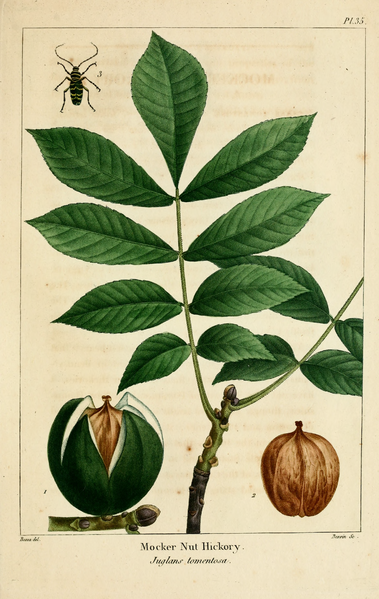
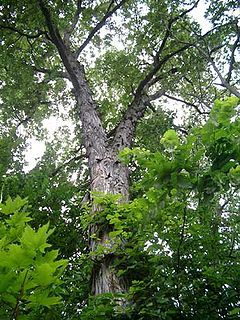
Compound, odd-pinnate, dark yellowish-green leaves (each to 6-12" long) have 5-7, toothed, ovate-lanceolate leaflets. Leaflets grow 3-6" long. Leaflet undersides are downy and glandular. Rachis and petiole are pubescent. Leaflets are aromatic when cut or bruised. Leaves turn an attractive yellow in fall. Thin dark gray bark develops furrows and flattened ridging as it matures. Non-showy, monoecious, yellowish-green flowers bloom in April-May, with the male flowers in drooping catkins (to 6" long) and the female flowers on short spikes.
Female flowers give way to fruits (rounded nuts), but only after the tree reaches about 25 years old. Each nut is encased in a thick, four-grooved husk which splits open in fall when ripe. Nuts are edible for humans but can be very difficult to extract from the husks, hence the common name of mockernut.
Nuts are eaten by a variety of mammals including squirrels, chipmunks, rabbits, raccoons and black bears. Light colored sap wood of this tree gives rise to a sometimes used common name of white hickory. Genus name is a Greek name for walnut. Specific epithet means with short hairs in reference to the leaflet undersides.
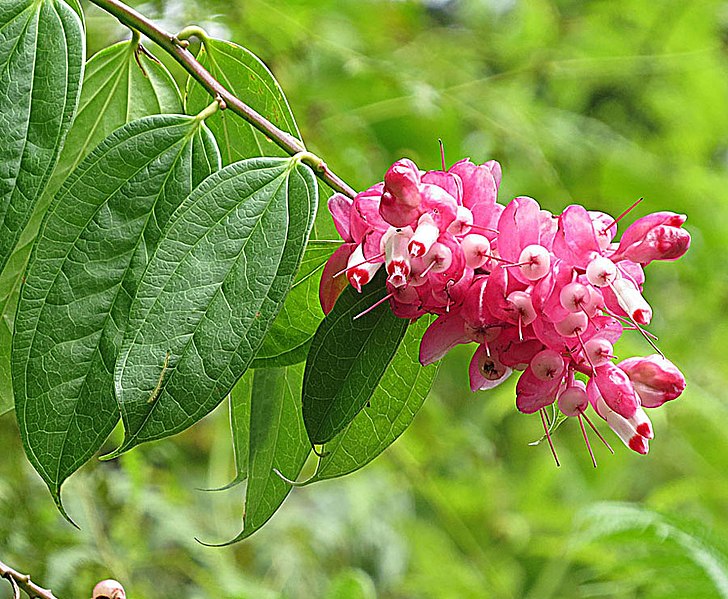
It is best grown in mild climates that do not get too hot, and does not get lower than the upper 20's during winter.
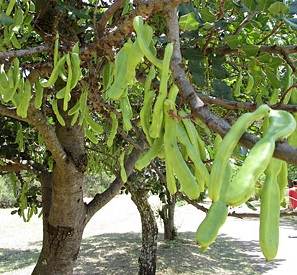
It is widely cultivated for its edible pods, and as an ornamental tree in gardens. The ripe, dried pod is often ground to carob powder, which is used to replace cocoa powder. Carob bars, an alternative to chocolate bars, are often available in health-food stores.
Carob consumed by humans is the dried (and sometimes roasted) pod. The pod consists of two main parts: the pulp accounts for 90% and the seeds for 10% of the pod weight.
Carob is mildly sweet and is used in powdered, chip or syrup form as an ingredient in cakes and cookies, and as a substitute for chocolate. Carob bars are widely available in health food stores. A traditional sweet, eaten during Lent and Good Friday, is also made from carob pods in Malta. Dried carob fruit is traditionally eaten on the Jewish holiday of Tu Bishvat.
While chocolate contains levels of theobromine which are toxic to some mammals, carob contains significantly less caffeine and theobromine, and is therefore used to make chocolate-flavored treats for dogs.
Carob pod meal is used as an energy-rich feed for livestock, particularly for ruminants, though its high tannin content may limit its use. Carob pods were mainly used as animal fodder in the Maltese Islands, apart from times of famine or war when they formed part of the diet of many Maltese. In the Iberian Peninsula, carob pods were used to feed donkeys.
The carob tree is native to the Mediterranean region, including Southern Europe, Northern Africa, the larger Mediterranean islands; to the Levant and Middle-East of Western Asia into Iran; and to the Canary Islands and Macaronesia.
Carob trees may be grown in USDA zones 9-11.
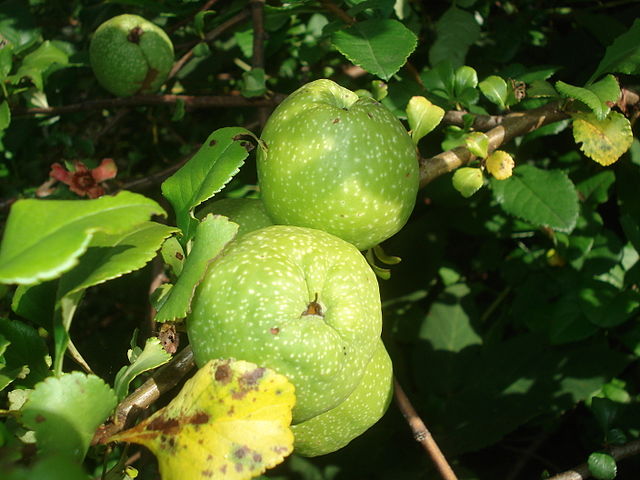
Very nice for a shrub border, hedge, screen, barrier or espaliered to wall. Cut branches with swollen flower buds may be forced indoors, making a welcomed winter flower arrangement.
Japanese Flowering Quince is a dense, broad-rounded, deciduous fruiting shrub or small tree. It typically grows to 5 to 10 feet tall and as wide. The leaves are finely-toothed, oval to oblong, glossy dark green to 3.5 inches long. Leaves may emerge in spring with a bronzy cast. 2 inch, scarlet to red and sometimes pink or white five-petaled flowers bloom before the leaves fully unfold in an often showy early spring bloom.
Flowers are followed by hard, dot-speckled, yellowish-greenapple shaped fruits (2.5 inch Quinces) that may acquire red tinges as they mature in autumn. The fruit is called Karin in Japanese and is very hard and astringent and very unpleasant to eat raw, though they do soften and become less astringent after frost (when they are said to be "bletted"), much like persimmons.
They are suitable for making liqueurs, as well as marmalade and preserves, as they contain more pectin than apples and true quinces. The fruit also contain more vitamin C than lemons.
Zones 5-9.
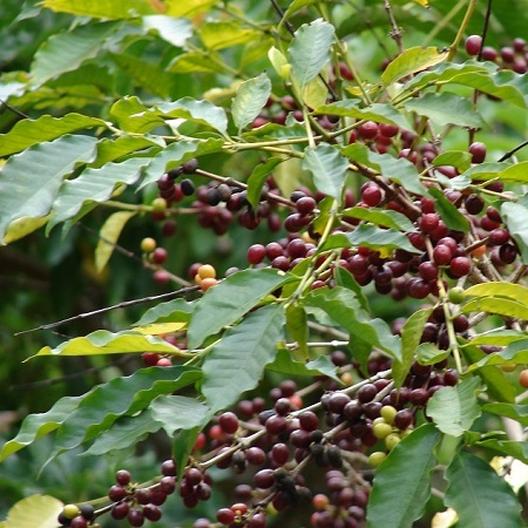
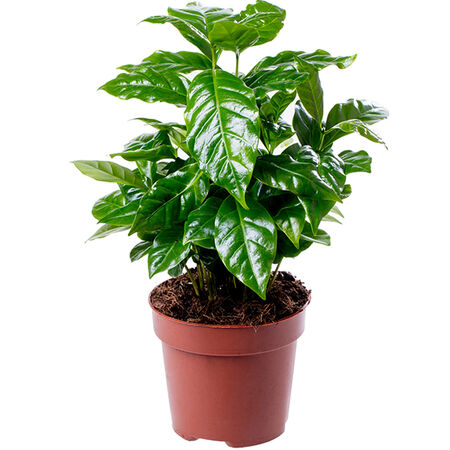
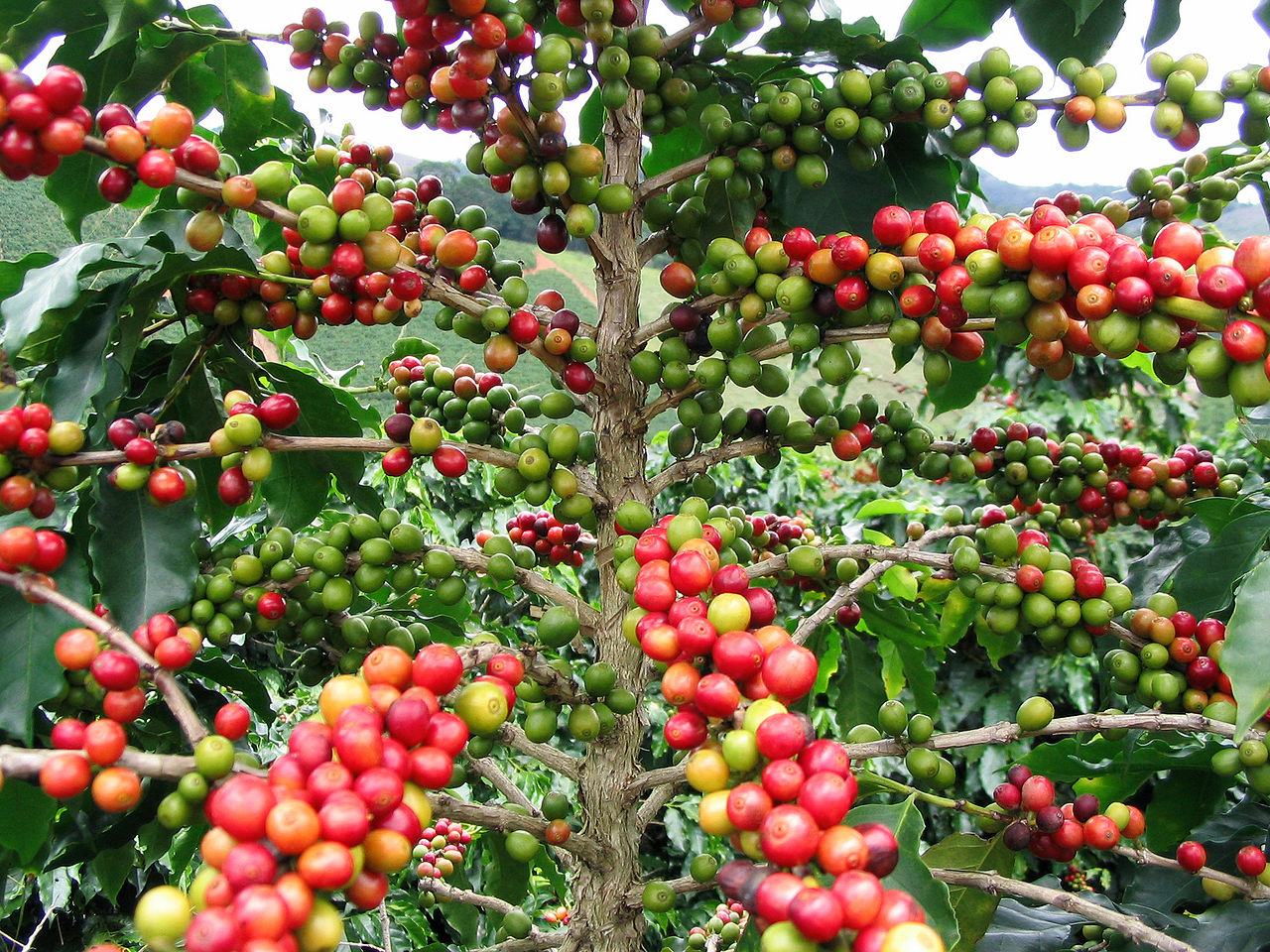
Considered to be among the easiest and hardiest of houseplants, coffee plant is great for both experienced and beginner gardeners. Not only is coffee plant care easy, but the plant itself is lovely and makes a wonderful addition to the home. Coffee plants prefer bright, but indirect, light. This means that they should be placed near a window but not directly in the window itself. They also cannot take temperatures below freezing and will not do well in temperatures that stay consistently below 65 degrees. Keep them away from drafts in the winter. When growing coffee plants, the soil needs to stay moist, but not soaking wet.
Also, make sure that both the soil and the pot your coffee plant is growing in has good drainage. The humidity around the plant will need to stay high as well. Setting your coffee plant on a water-filled pebble tray will help with humidity. Like many houseplants, a coffee plant will need less water in the winter than in the summer.
Plant coffee plants in a rich, peat-based potting soil with excellent drainage. Coffee plants prefer acidic soil, so if your plant is not thriving add organic matter such as sphagnum peat moss to increase soil pH. Coffee plants can grow in soil with a pH range of 4 to 7 but the ideal pH range is closer to 6 to 6.5.
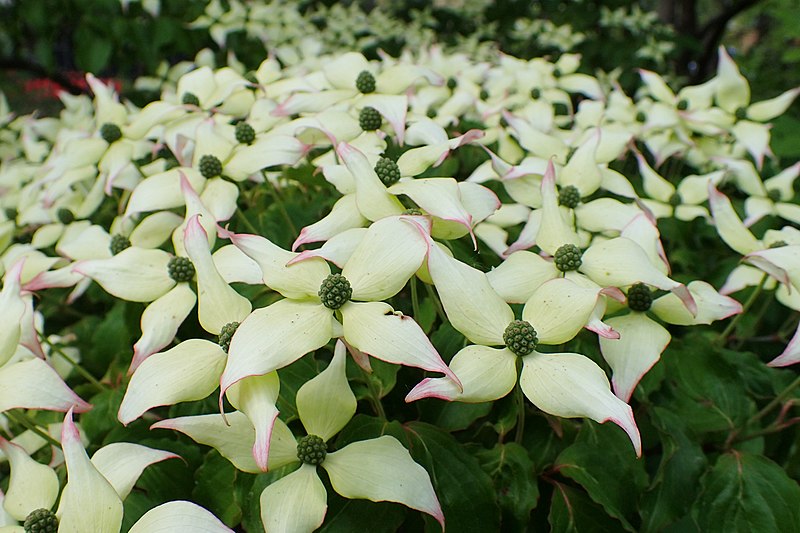
Kousa dogwood is an excellent small specimen tree for small lawns. Two outstanding characteristics are the four-petaled, white flowers that appear above the foliage in June and reddish-purple fall color. In the Midwest, this is a hardier substitute for the acid-loving flowering dogwood. The shallow root system will benefit with a layer of mulch to maintain a cool root environment.
Kousa Dogwoods are very showy for a long period of time as the flower bracts are showy longer than most flowers. They'll give you up to a month of display. The flowers precede the red fruit, which looks like a raspberry. Some people make jellies, jams and wine from the round red berries, or, leave the red colored fruit for birds! They'll be happy to snap them up for you without any fuss or muss.
best suited for zones 5-8.
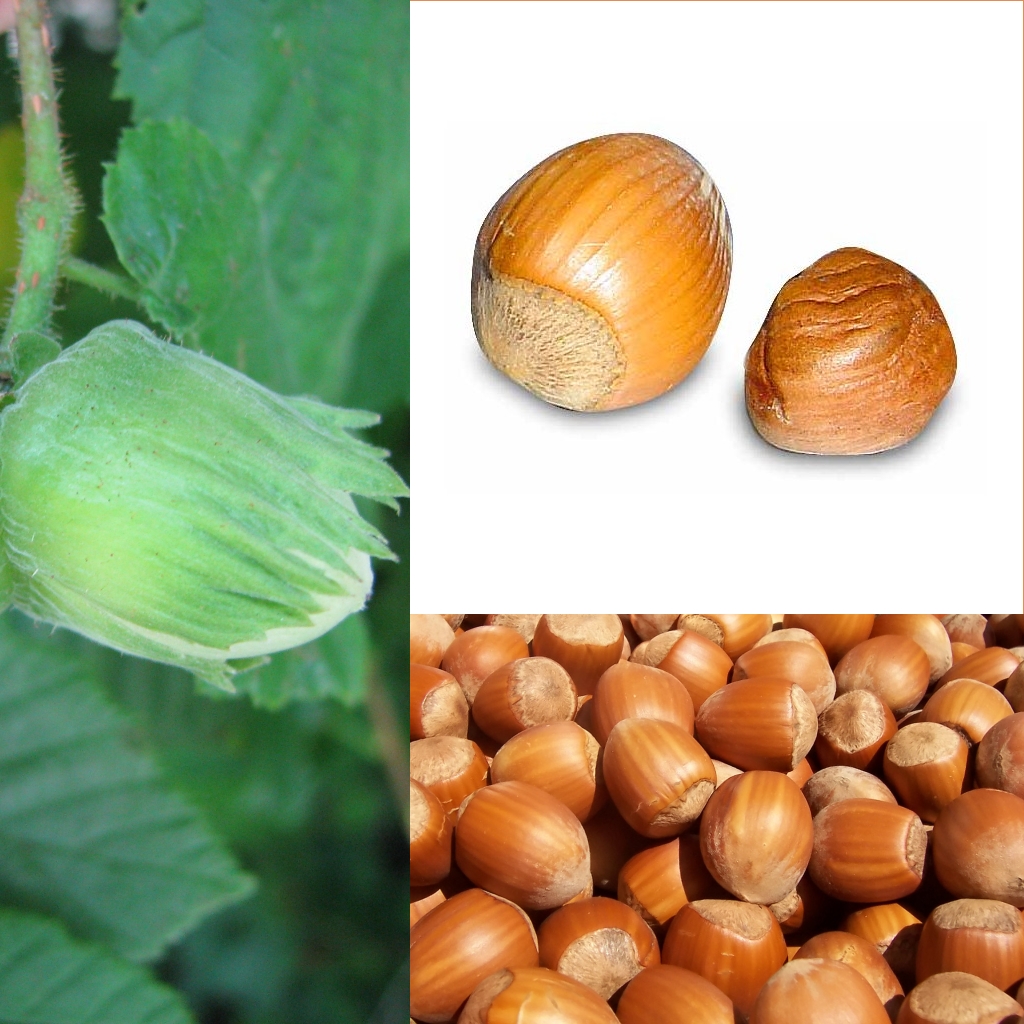
American hazelnut is a thicket-forming native shrub, excellent for naturalizing, woodland gardens and shade areas. Showy male flowers (catkins) add early spring interest, dark green leaves turn a beautiful kaleidoscope of colors in the fall. The nuts mature from September to October, attracting seed-eating birds, such as blue jays and woodpeckers.
Also known as American Hazelnut. Good for Zones 4-9. Multi stemmed, branching shrub to about 10 ft. tall. Attractive,
pointed, toothed, dark green leaves. Bears loads of edible nuts in fall. Native to Eastern
US.
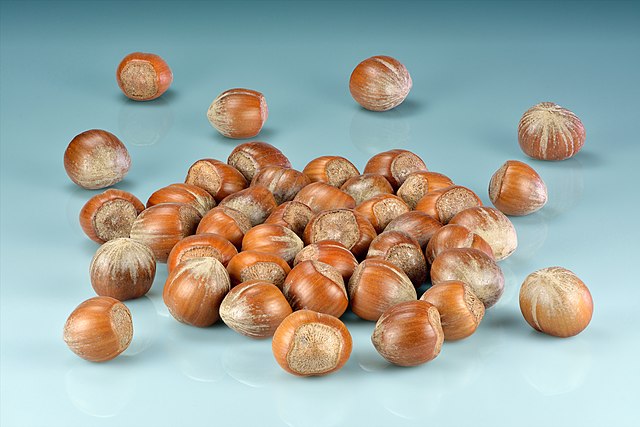
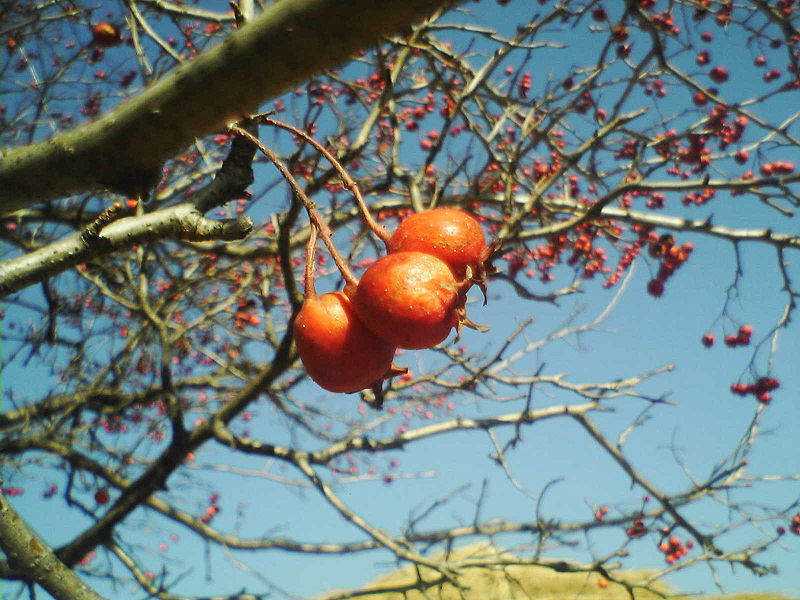
Zones 5-9. 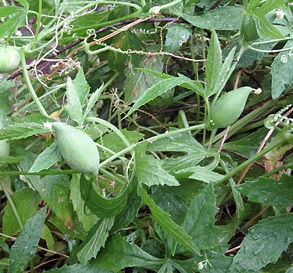
Can easily be grown in the garden, on a fence or trellis. It is an annual plant. One of the most interesting aspects of the plants is that when ripe, the fruits become spring-loaded missile devices, splitting and turning themselves inside-out to launch their seeds up to 5-6 feet away into the garden. This is quite the conversation plant.
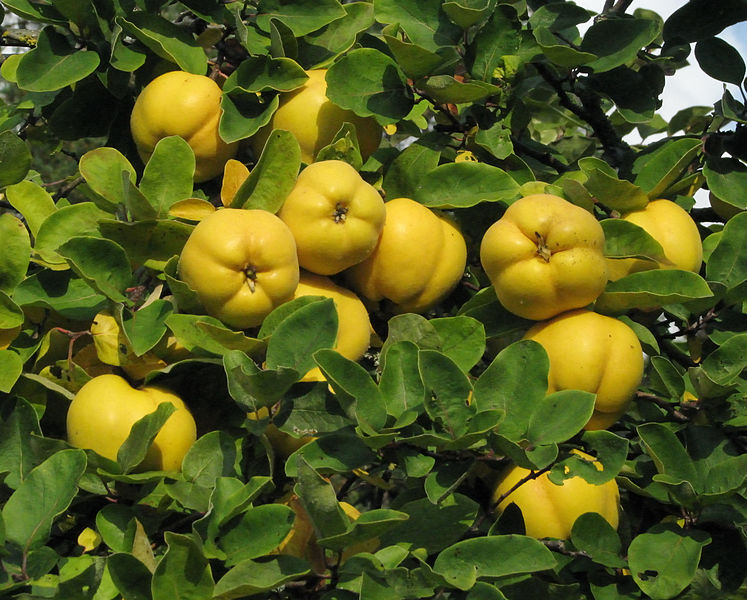
While some quince can be eaten raw, its true beauty is in the delicious fragrance and rosy-red color unlocked by poaching or cooking them. Quince jelly is a natural, because of the natural supplies of pectin in quinces. Quince is also delicious added to apple or pear tarts and pastries and quince paste is an elegant accompanient to cheeses such as manchego.
The fruit ripens in mid-fall and contain high levels of pectin, so are ideal for using in jams and preserves. The trees are attractive while in bloom and grow to about 15' tall at maturity. Hardy in USDA zones 4-9.
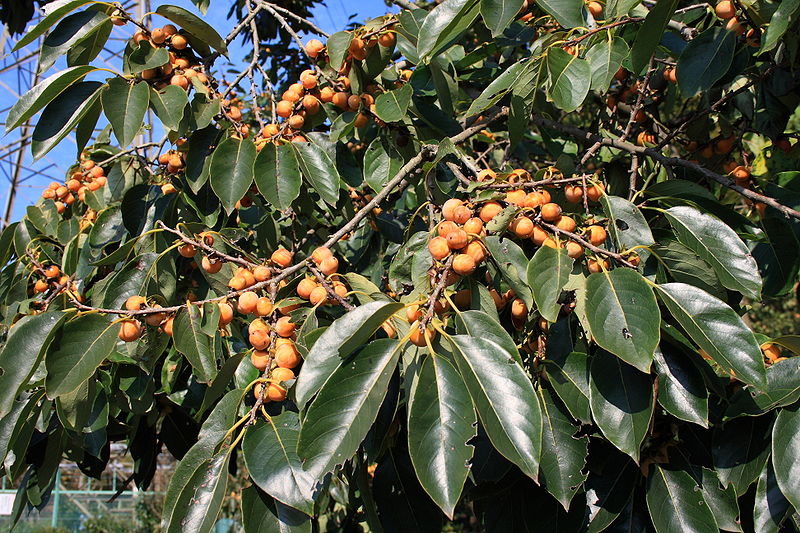
It is a decidious tree that is native to Middle East and South Asia, especially from China and Japan. This tree can reach up to 90 ft (30 m) tall in warm areas, but will generally be smaller. (Up to about 30 ft -10 m- tall) it bears edible small fruits in autumn.
The leaves of the date plum are decidious, and are about up to 4-5 in (10 - 12.5 cm) long.
Flowers - Flowers are small and yellow-green, and are dioecious. At least both a male and female plant will be required to get viable seeds. A pack of 10 seeds will usually produce both male and female plants, can be pollinated by other persimmons.
The date plum is a close relative to the persimon. However, the date plum is a smaller fruit, as it is about 0.75 in (2 cm) wide. It is a globose yellow fruit that turns purple-brown when fully ripe. Like the persimon, the date plum looses its astringency when fully ripe. The flesh is then very soft and rich in flavour.
This tree is frost hardy down to -15°F (-25°C) and less. It can easily be grown in USDA zones 5 and warmer. The date plum needs a fairly well-drained and deep ground.
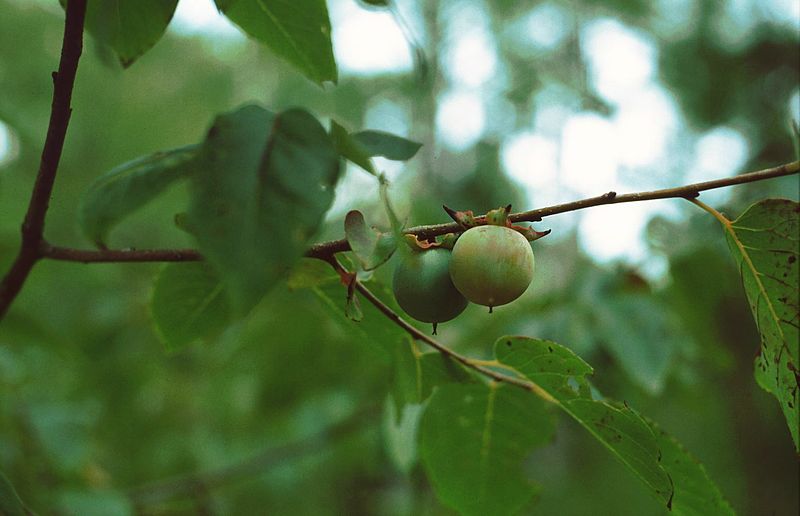
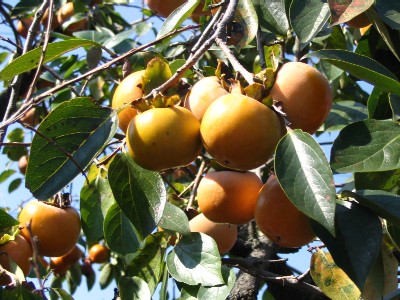
The bark on older trunks is black and broken up into distinctive, regular square blocks. The female flowers develop into showy orange fruits, up to 2 inches in diameter, that are very astringent during maturation, but deliciously sweet when fully ripe.
Persimmon is native to eastern North America from New England, west to Kansas, and south to Texas and Florida. It is one of the most widely-adapted of trees, growing naturally in bottomland swamps, along stream banks, in upland forests, in fields, piney woods, and even dry scrub lands.
Prefers full sun, but also does well in partial sun. Highly adaptable, tolerates drought and even brief flooding. Hardiness: USDA Zones 6-10.
Wild persimmons and their seedlings vary greatly in fruit quality and size. Plant persimmon trees in the natural area of your landscape where their fruit will can be shared with wildlife as well as children.
When you gently shake a persimmon tree, the ripe fruits fall to the ground. If you have to pull the fruit off the tree, it will surely pucker your mouth inside out! Ripe persimmons are delicious out of hand, and can be made into puddings and cakes. Frozen, they satisfy like ice cream, while dried persimmons are like dates. Persimmon wood is prized for its beauty and extreme density, and used for golf club heads and pool cues.
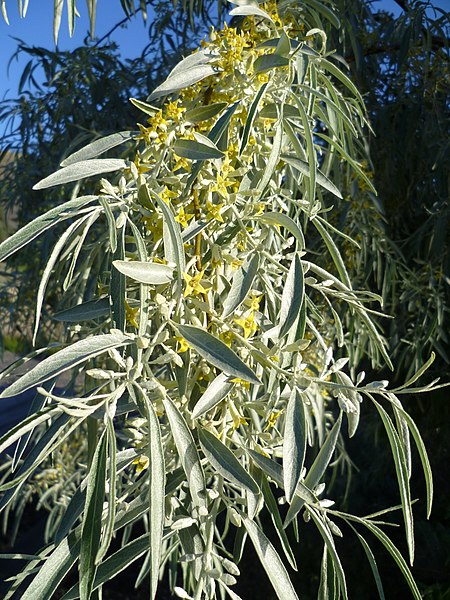
Although its fruits are used in drinks and to make preserves,
it is more sought after for its white shoots and
silver undersides of leaves which give them an ornamental
appeal.
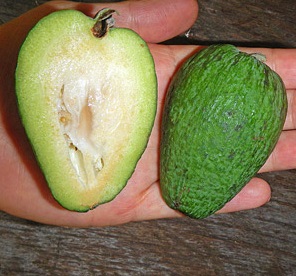
The pinkish flowers have prominent red stamens and are followed by plum-sized, yellowish green fruits that are amazingly delicious, highly aromatic, lightly acidic and remind of pineapple and strawberries. They are eaten raw or used in jams, juices or sauces.
Hardy to zone 8.
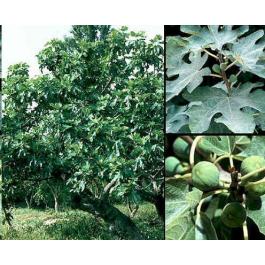
The fig is a picturesque tropical looking tree or shrub with a dramatic spreading habit. The breadth is often wider than the height of 15 to 30 ft (4.6-9 m) with equal spread. This deciduous, low-branching tree is usually single trunked, with pale, silvery gray smooth bark. In colder regions, figs are grown as bushes with multiple stems and branches close to the ground that are laid down and buried before winter. The Ficus makes an especially attractive specimen in the landscape. Plant one on an expanse of lawn, where it's graceful spreading shape and smooth twisting branches command attention in all seasons.
The alternate, long petioled, dark green leaves are broad-ovate to nearly orbicular in outline and may become 20cm(10 in) long and 10-20 cm (4-10 in) wide with 3-5 lobes. The upper surface is thick and ribbed while the underneath is finely haired .The leaves texture is rough and they can irritate skin.
The Genus Ficus is unique for bearing its flowers inside a nearly closed receptacle, or branch, which ripens into a fleshy fruit called a fig. The small flowers are produced twice in the season. The first ones (the breba crop) are produced near the ends of the shoots of the preceding flush of growth, whereas the second crop (the main crop) is produced in the axils of the leaves on the new growth.
The mature fruit is pear shaped and variable in size and range in color from a greenish-yellow to purple. The edible fruit is a hollow succulent receptacle with many ovaries on the inner surface, which may or may not produce seeds, depending on the variety.
Figs usually begin bearing fruit within two years and may bear twice per year. Figs grow nicely and will bear fruit when grown in containers where they can be artfully pruned to create a living sculpture to decorate deck or patio. This is convenient for two reasons: cold climate growers can move their figs indoors in winter and the plants can be removed from the patio when the fruit begins to (over)ripen. The edible fruit are extremely attractive to birds.
Hardy for zones 7-10. Note that with winter protection, it can be grown as far north as Zone 5. The Ficus Carica likes reflected sun, full sun, or part shade. Fig trees are tolerant of poorly drained soils and grow well in relatively infertile soils. When fully dormant, fig trees can tolerate temperatures as low as 10 to 15°F (-9°C). Even if frozen, figs often will restart from the roots and produce a crop the following summer. They are drought tolerant, once established. Figs responds well to pruning and can be espaliered or pruned heavily in the dormant season for size control and to increase the main crop. Water the tree every month or two while it is growing, and once or twice per year when fully grown. They grow much better with a monthly fertilizing program and deep watering twice a month in summer. 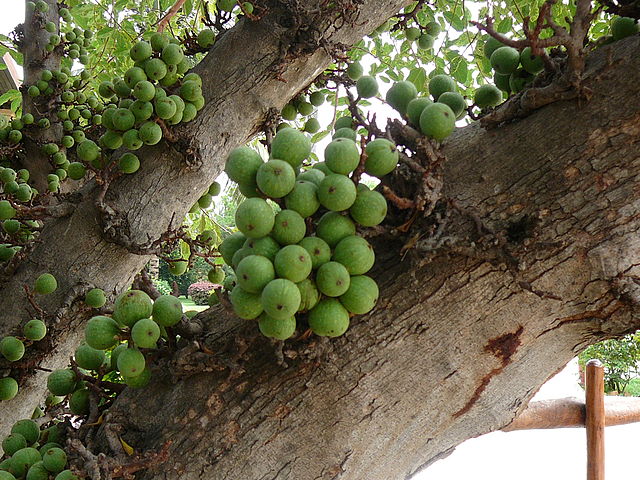
The large, glossy green leaves have attractive, light veins. Ficus lutea is widespread over tropical and southern Africa and found in a variety of forests and woodlands from sea level to 1800 m. It is a very fast growing tree that makes an exceptional ornamental for warm temperate and tropical regions in USDA Zones 10 and above. Easily maintained as a potted plant by occasional grooming of the branches and aerial roots.
A tree of many uses in Africa, the tree is harvested from the wild for local use as a source of medicines, fibres, dyes, latex and potash. Plantations have been established in Florida and SE Asia for the production of latex, which is valued in the pharmaceutical industry.
The latex can be used to make a good quality rubber, known as Dahomey rubber, which is where the name orignates.
It also is known for its abundance of fruits borne directly on the branches.
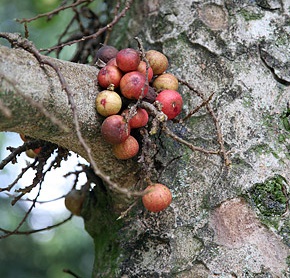
Impressive large Ficus species which can easy be recognized by the myriad of fruits that are hanging from its branches almost the whole year round.
Popularly known as the Cluster Fig Tree or Goolar (Gular) Fig, this is native to Australasia, South-East Asia and the Indian Subcontinent. it is unusual in that its figs grow on or close to the tree trunk.In India the tree and its fruit are called gular in the north and atti in the south.The fruits are a favorite staple of the common Indian macaque. In Vietnam, it is called sung.
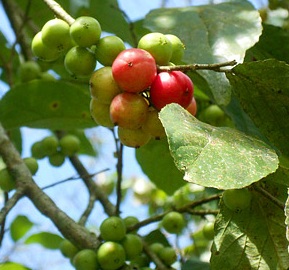
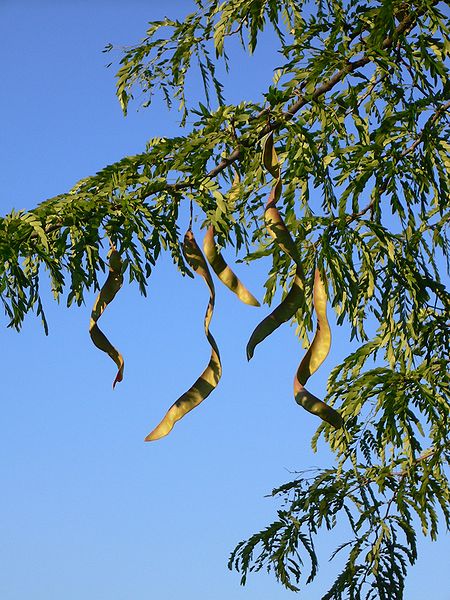
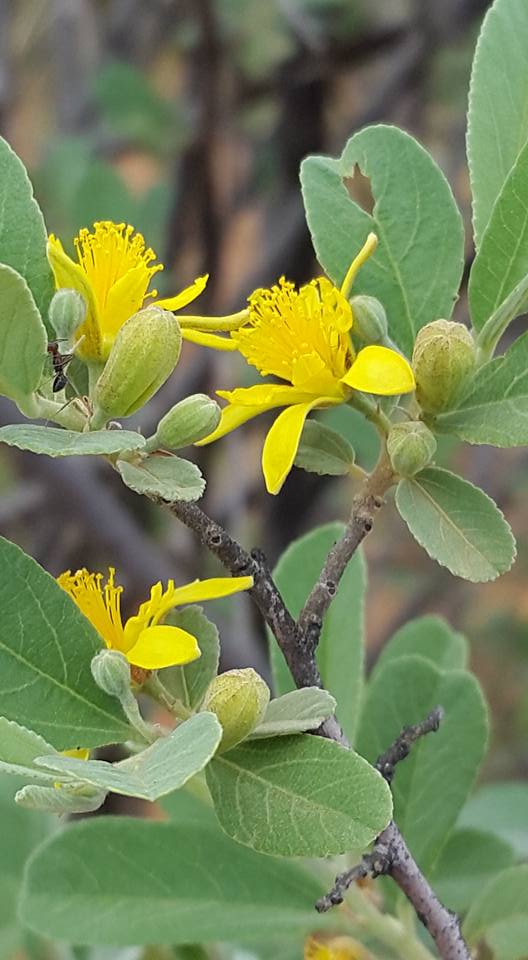
In the flowering season, the beautiful sweet-scented star-shaped yellow flowers can be found growing on the angles where the leaves grow on the branches. These in turn make way for the berry-like fruit that starts showing from December to April. The berry fruit is reddish brown in colour when ripe and ready to eat, is sweetish in flavour and has a fairly high sugar content.
A recent seed addition from Africa, we do not yet know zone requirements for this plant, so grow at your own risk!
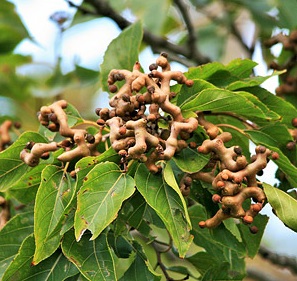
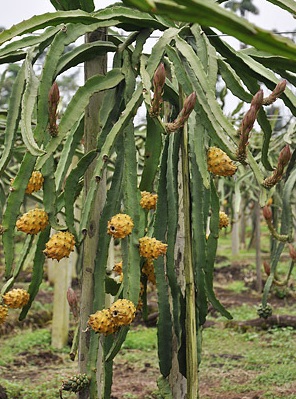
Yellow Dragon fruit have an oblong shape and are slightly smaller in size than the more common red varieties. Their thick yellow skin is covered in small knobby protrusions, which when immature displays small spines that will naturally fall off as the fruit matures. Beneath the skin is a dense white flesh containing numerous petite, edible black seeds. Yellow Dragon fruit has a crisp, juicy texture and very sweet, tropical flavor with floral hints and no acidity.
Yellow Dragon fruit is typically eaten raw, either straight out of the skin or scooped out and cubed, balled or sliced. For the best flavor, refrigerate the fruit for 2 hours before preparing raw. Add to tropical fruit salads or serve alone as dessert. Yellow Dragon fruit flesh can be pureed and made into a sauce or syrup or added to smoothies and cocktails. Freeze the pureed pulp for sorbet or a granitas. Use the flesh to flavor pastries or other baked goods. Yellow Dragon fruit can be kept at room temperature for a few days and will keep in the refrigerator for up to a week.
The Yellow Dragon fruit has been used for centuries by the native people of northern South America. It was used for both medicinal and culinary purposes. It has only been since the early 2000s that Yellow Dragon fruit was approved for export to North America and Europe.
It is native to the northern region of South America, what is now Colombia and Ecuador. The fruits are still cultivated there, with Colombia being the largest producer, and are exported all over the world. They are also grown in Bolivia, Peru, and Mexico and in California and Florida in the United States. Growers specializing in rare fruits in the United States, specifically in southern California and Florida, grow Yellow Dragon fruit on a smaller scale. The Yellow Dragon fruit cactus has long extending stems that can grow up to 20 feet long and require some form of trellising or support to grow on. The cactus prefers arid tropical and subtropical climates and is fairly heat resistant and somewhat cold-hardy. Yellow Dragon fruits can be spotted at most markets and specialty stores and at farmer’s markets in Southern California and Florida.
Zones 10 and higer outside, can be grown inside in cooler zones if good light provided.
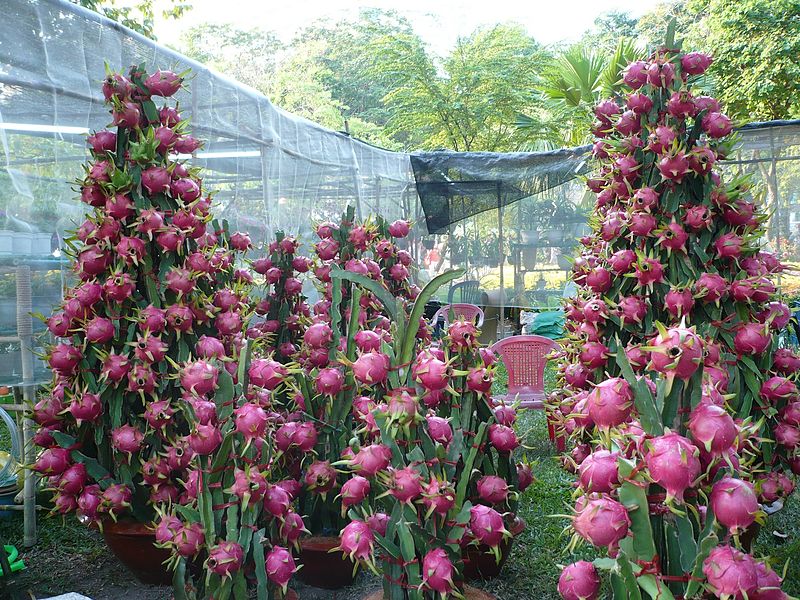
Hylocereus undatus is a vine-like cactus that is often grown as a night-flowering ornamental plant and as a fruit crop. The fruit is highly decorative, with a bright red skin, studded with green scales. The flesh is white, juicy and delicious in flavour, with tiny black seeds. Its exact native range is uncertain but is considered to be in Central America. Since the late twentieth century it has been widely planted on a commercial scale as a fruit crop in many tropical regions, particularly in Vietnam and other South-East Asian countries.
Hylocereus undatus is one of the most unruly species in the entire cactus family. It is a hemi-epiphyte, its fleshy, three-angled, jointed stems clamber over other plants and produce fibrous, aerial roots that cling to any available surface. In their natural habitat support is provided by trees, shrubs and rocks in the dry, open woodland of Central America and northern South America, where the species is thought to have originated.
Zones 10 and higer outside, can be grown inside in cooler zones if good light provided.
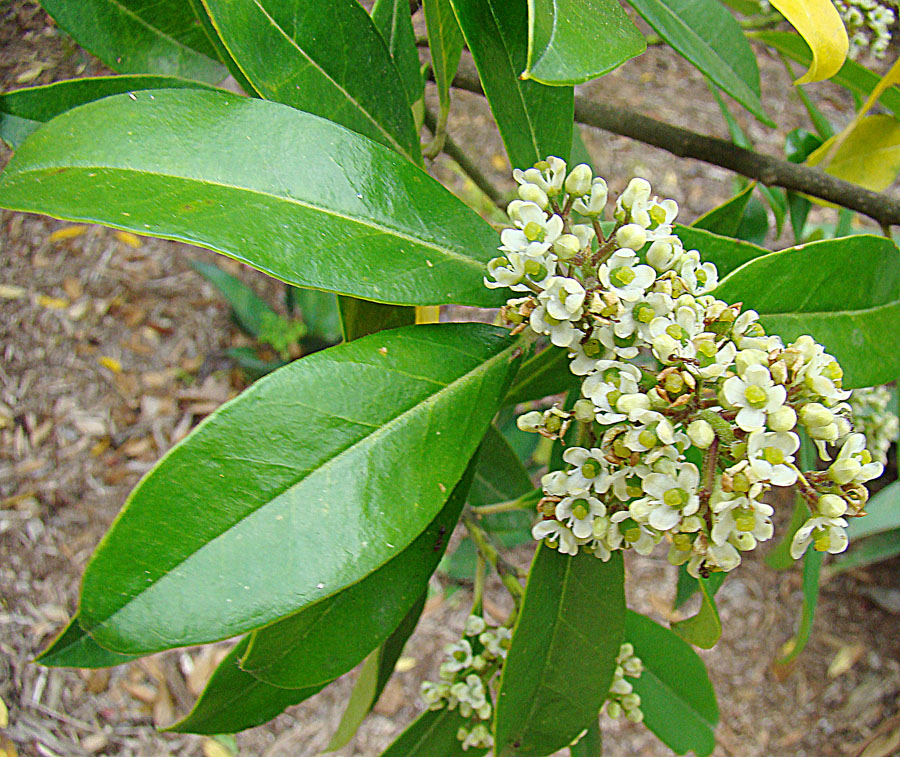
Grow you own Yerba Mate and enjoy this popular South American tea as an alternative beverage to coffee. In Latin America, Yerba Mate is the beverage of choice and has a smoother taste than green tea, plus it's loaded with antioxidants. The plant itself makes a wonderful potted plant for its graceful full-leafed branches. Under warm temperatures, it grows throughout the year, even in the north as a potted plant with flowers arriving during the winter/spring months. The leaves can be harvested once the plant is established. Grow in full sun with temperature above 65 degrees for fastest growth.
Hardy to Zone 10 and higher for outdoors.
Yerba mate was has been used as a beverage since the time of the ancient Indians of Brazil and Paraguay. In the early 16th century, Juan de Solis, a Spanish explorer of South America's famed La Plata River, reported that the Guarani Indians of Paraguay brewed a leaf tea that "produced exhilaration and relief from fatigue." The Spaniards tried the beverage and liked it. Their subsequent demand for the tea led the Jesuits to develop plantations of the wild species in Paraguay and yerba mate became known as "Jesuits' tea" or "Paraguay tea."
Methods of leaf preparation for the traditional tea beverage vary then and now: in one method, the branches are cut, then held over an open fire (to fire-cure the leaves). This deactivates the enzymes in the leaves (making them more brittle) and the green color of the leaves is retained in the subsequent drying process (with charred bits often found in the resulting tea product, which lends to a smoky flavor). Other methods include a brief par-blanching of the leaves in boiling water (to deactivate the leaf enzymes and soften its leathery texture). They then are toasted dry in large pans over a fire or inside a brick oven-resulting in a finished brown-leaf tea.
The wild plant has a distinct aroma and taste that has not been matched by plantation cultivation. In South America yerba mate is considered a national drink in several countries; in Europe, it is called "the green gold of the Indios." In Brazil and Paraguay (leading exporters of mate), some production still comes from wild stands-most of which is found in the humid depressions of the foothills. It is not unusual for one wild tree to yield 30-40 kg of dried leaves annually. In wild harvesting, mate gatherers, called tarrafeiros or yebateros, travel through the jungle searching for a stand of trees (called a mancha). Harvesting is done between May and October, when the tree is in full leaf. Leaves are picked from the same tree only every third year, which protects it for subsequent crops. Most of the mate in commerce today, however, comes from large cultivation projects in Paraguay and Uruguay.
The word mate is Spanish for "gourd," and refers to the small gourd cup in which the tea beverage traditionally is served throughout South America. It is also served with a metal drinking straw or tube, called a bombilla, which has a filter attached to the lower end to strain out leaf fragments. The bottom third of the gourd is filled with fire-burned or toasted leaves, and hot water is added. Burnt sugar, lemon juice, and/or milk often is used to flavor the refreshing tea, which occupies a position rivaling that of coffee in the United States. Mate bars are as prevalent in South America as coffee bars are in North America and Europe; mate drinking has deep cultural roots.
In addition to its standing as a popular beverage, yerba mate is used as a tonic, diuretic, and as a stimulant to reduce fatigue, suppress appetite, and aid gastric function in herbal medicine systems throughout South America. It also has been used as a depurative (to promote cleansing and excretion of waste). In Brazil, mate is said to stimulate the nervous and muscular systems and is used for digestive problems, renal colic, nerve pain, depression, fatigue, and obesity. A poultice of the leaves also is applied topically to anthrax skin ulcers (for which mate's tannin content - highly astringent - may be the reasoning behind this use).
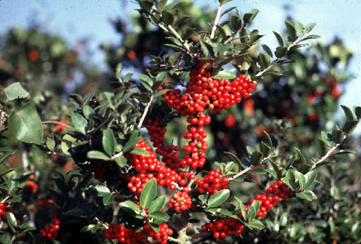
The leaves are small, leathery and bright green and are not prickly like other hollies. The flowers attract bees and butterflies. This holly can rapidly reach 10 to 20 feet tall and 8 to 12 feet wide, so allow proper spacing when planting multiples. It will form thickets unless the suckers are removed.
Though occasionally used for hedging, it is primarily used for landscaping. The wood of the Ilex vomitoria is heavy and hard, making it useful for turnery, inlay work, and other woodenware. The plant is also culturally significant: Native Americans used the leaves and stems to make a tea containing caffeine, a unique quality in a North American plant. Rediscovered in modern times, yaupon tea made from dried leaves is now commercially available. Add this picturesque and useful plant to your garden today!
Grow as a container plant or outside in zones 7-9.
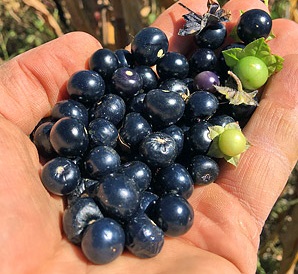
The fruit has a pleasant taste and aroma and is prized as a food source by many.
This little tomato is found across Mexico and it's mostly used in the cuisines from the states of Oaxaca, Veracruz, Tamaulipas and Jalisco. It is rarely found in markets, and when it is, usually in small quantities. The ripe fruit has been used economically in parts of Mexico fresh, dried, in jams or preserves. Only completely ripe fruit are to be eaten, as green berries and the rest of the plant may be poisonous. The plant grows like a tomatillo plant and the berries are a decent size and produces well even in poor sandy soils.
This type of "berry tomato" is very juicy, has lots of seeds and a thick skin, peculiarities which the people who consume it enjoy. Said to taste like a sweet and spicy cross between a tomato and a grape, it can be eaten raw or made in to a delicious jam. Definitely is a plant for super food and gourmet for vegan fans.
Plants produced many cherry-sized black berries. They fall off when ripe. It is also a folk medical plant of Kamasa Indians in Columbia and Tarahumara Indians in Mexico. Plants can be grown like commonly tomatoes. This true perennial and can live many years in conservatory. In spring it shoots up from stout roots.
As with other members of the Solanum family, such as tomatoes and aubergines, jaltomata may require staking or some form of support.
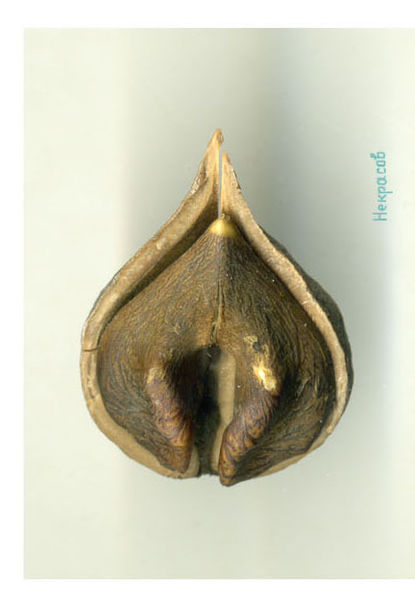
Butternut is more valued for its nuts than for lumber. The soft coarse-grained wood works, stains, and finishes well. Small amounts are used for cabinetwork, furniture, and novelties. The sweet nuts are prized as a food by man and animals.
The kernels are sweet, oily and tasty, having a buttery flavor as per the common name. Native Americans used the nuts for food and boiled the tree sap for syrup. This species is sometimes commonly called white walnut because of the light color of the wood.
Butternut is easily grown but must be transplanted early because of the quickly
developing root system. Hardy for zones 3-7.
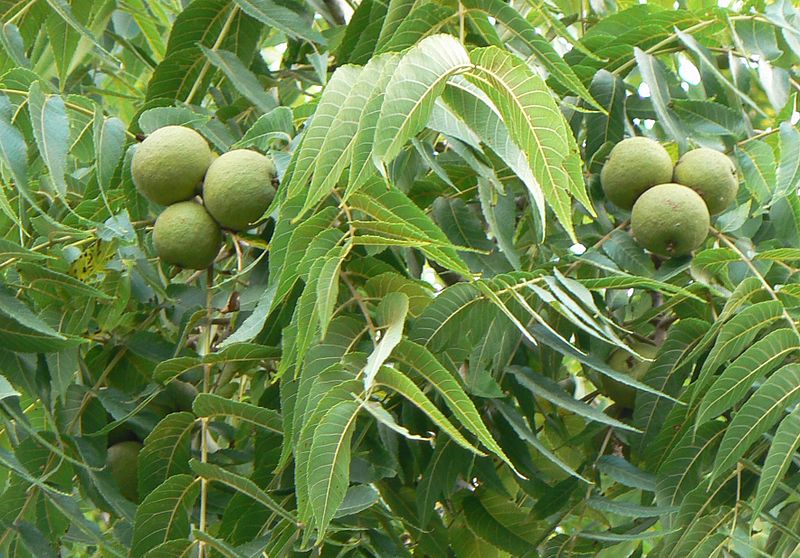
Black walnut produces seed crops every year, and heavy seed crops intermittently. Seeds are highly sought by
squirrels, which cache seeds by burying them. Germination occurs the following year. Seeds can form a long-term
seed bank. Black walnut is intolerant and grows moderately fast. First reproduction may occur by ten
years. Few walnuts live longer than 200 years, though a few persist for up to 250 years. Stems are usually short
and forked unless grown with competition.
Walnut seeds are an important food item for grey squirrels. Walnut leaves are host to a number of insects
and diseases, which cause the leaves to drop in late summer. Black walnut is famous for its allelopathic
inhibition of the growth of nearby plants. Despite this, the effect is not commonly observed in the field.
Black walnut is the premier hardwood species in North America, and one of the most valuable woods in the world.
Supplies of quality walnut are declining, as a result of overharvesting. Attempts to grow walnut in plantations
for fine wood production have met with limited succcess. Walnut wood is dark and hard, but workable, with fine
grain. It is prized for gunstocks, furniture and face veneer. The nuts are collected throughout the midwest,
and are used in baking and ice cream making.
Native Americans and European settlers prized the rich nuts. Native Americans harvested the buttery fat left
from boiling the nuts, which may be up to 60% fat. Cherokees dried the nuts for winter use, and made
porridge from ground nuts mixed with hominy and beans. Iroquois made beverages, soups, breads, pies and puddings
from the nuts. Native Americans of many tribes also made dye from fruit husks, roots, barks and charred wood, and
used many parts for drugs. Hardy to zone 4.
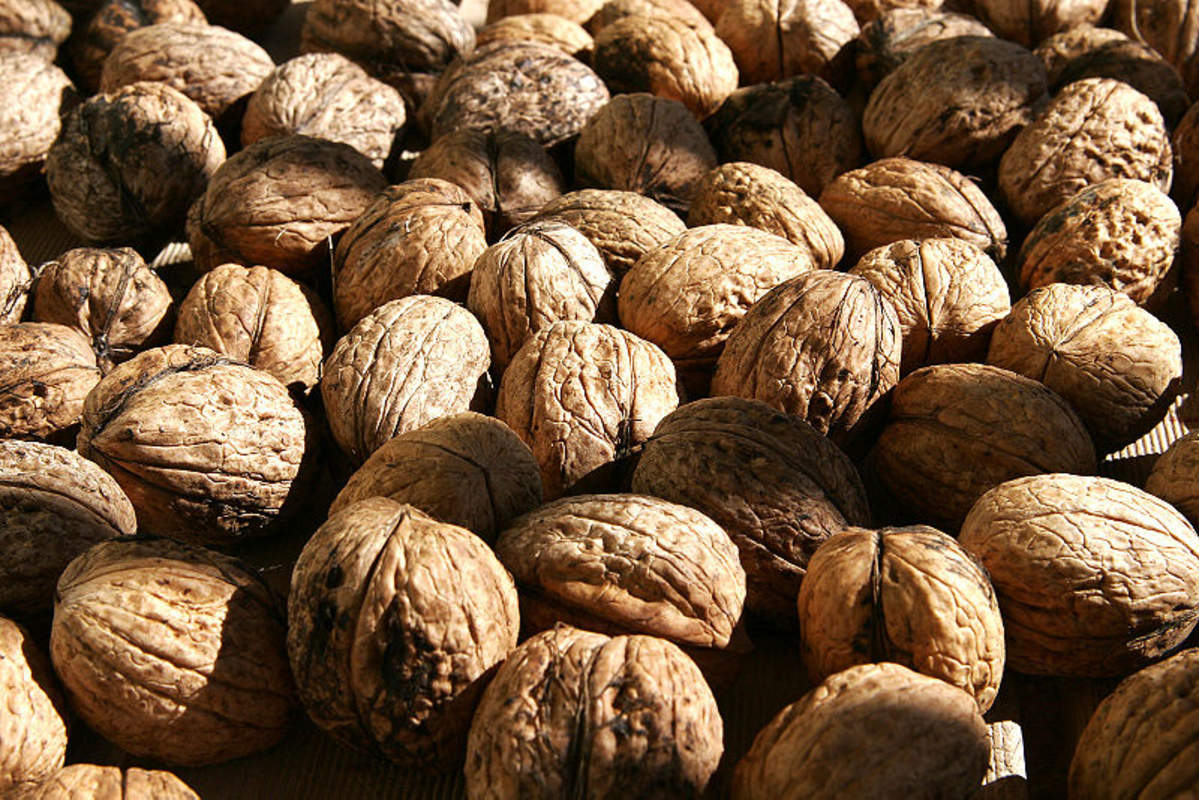
The bark is smooth, olive-brown when young and silvery-grey on older branches, with
scattered broad fissures with a rougher texture. Like all walnuts, the pith of the twigs
contains air spaces, the chambered pith brownish in colour. The leaves are alternately
arranged, 25-40 cm long, odd-pinnate with 5-9 leaflets, paired alternately with one
terminal leaflet. The largest leaflets the three at the apex, 10-18 cm long and 6-8 cm
broad; the basal pair of leaflets much smaller, 5-8 cm long, the margins of the leaflets
entire. The male flowers are in drooping catkins 5-10 cm long, the female flowers
terminal, in clusters of two to five, ripening in the autumn into a fruit with a green,
semi-fleshy husk and a brown corrugated nut. The whole fruit, including the husk, falls in
autumn; the seed is large, with a relatively thin shell, and edible, with a rich flavour.
Good for zones 6-9.
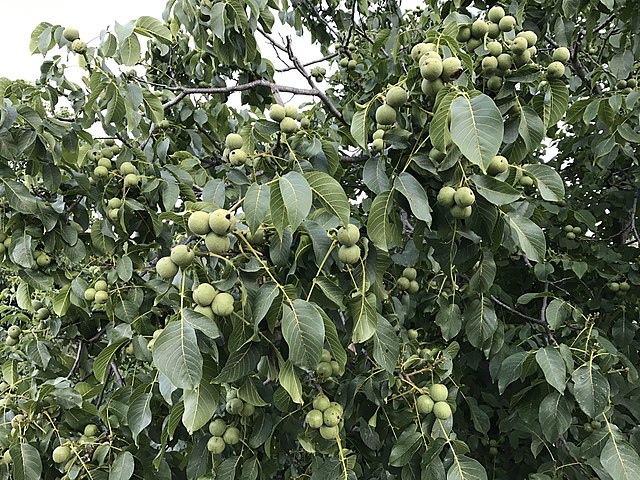
Carpathian English Walnut is a large tree that is commonly grown for its edible qualities. It produces large brown oval nuts in hard shells which are usually ready for picking from early to late fall. The nuts have a sweet taste and an oily texture. Carpathian English Walnut will grow to be about 50 feet tall at maturity, with a spread of 50 feet.
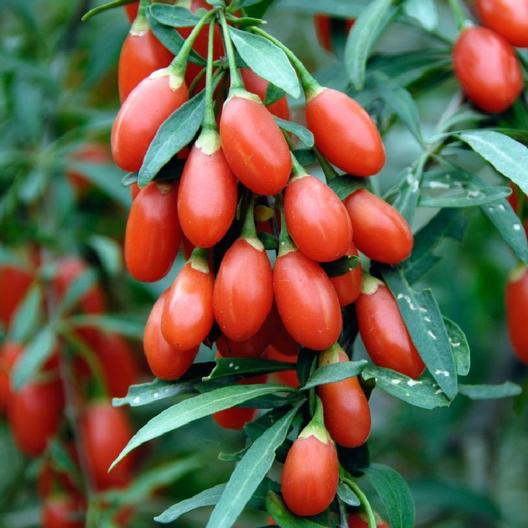
With its purple flowers, attractive foliage and bright berries, Goji berry plants make a wonderful addition to your perennial garden.
Plant prefers full sun and fast-drying soils. High desert conditions are quite conducive. Goji plants are drought-tolerant.
A graceful shrub that bears large edible berries. The leaves are also edible when fresh and used in salads. A wine is made from the fruit that is said to prolong life. A perennial for zones 5-9.
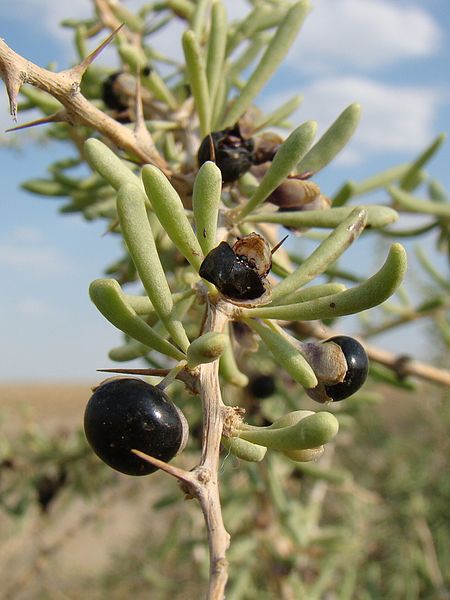
It also improves vision problems and dizziness. In Kashmir it is used to treat blindness in camels. Studies have shown that black gojiberry protects against radiation and may help reduce the side-effects of radiation therapy. As well, the berries boost the immune system and help prevent or slow the growth of cancer.
Best sown in spring, kept in pots the first season, and then planted in the garden the following spring. Depending on conditions, plant will grow from 16-36 inches tall.
Based on its natural range we believe it is hardy to at least zones 4 to 7. It can be grown in warmer zones if provided with partial shade during the day.
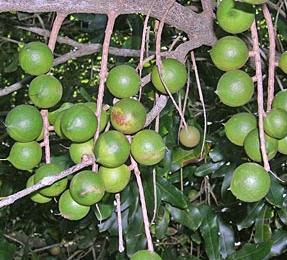
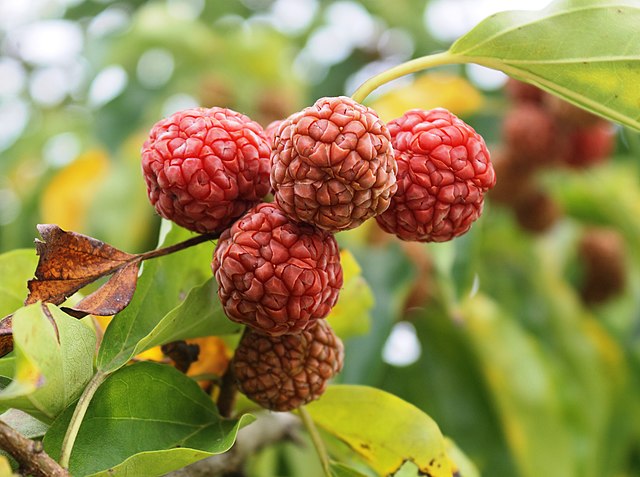
Beyond their delectable taste, the plant offers numerous health benefits. For instance, the wood is perfect for an infusion that treats sore or weak eyes. The inner bark and wood treat ailments like malaria, debility, and menorrhagia. The root stimulates milk production, treats amenorrhea, and exhibits galactagogue properties. Moreover, the plant is famous for its ability to combat blood stasis, increase blood circulation, and alleviate conditions like cancer, especially in the alimentary system, lungs, and blood.
Native to East Asia, it grows up to six meters in height and can be cultivated for fruit. Try the myriad benefits Maclura tricuspidata Che offers.
USDA zones 5-9.
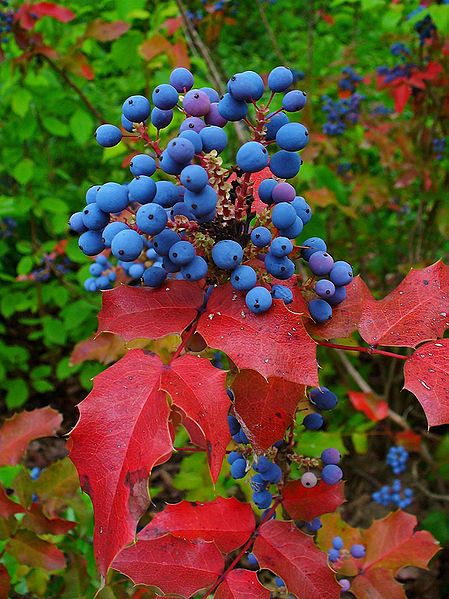
Location: Oregon grape holly is native from the northwestern United States on into Canada. It is widely grown as an ornamental.
Culture: Light: Needs shady conditions, hot direct sun will burn leaves. Moisture: Likes moist soil high in organic material, but adaptable. Hardiness: USDA Zones 5-9.
Propagation: Clumps can be divided.
Usage: This plant thrives in shady areas where selection of plants is limited. Can be used in entry ways and under roof eaves if adequate moisture is maintained. Looks great under a canopy of pine along with azaleas and camellias. Can also be used as an outdoor container plant.
Features: The bright yellow flowers are beautiful against the lustrous blue green leaves. The bright blue berries on dark red stems are even more striking. The grape like berries can be made into jelly.
Oregon Grape Jelly Recipe.
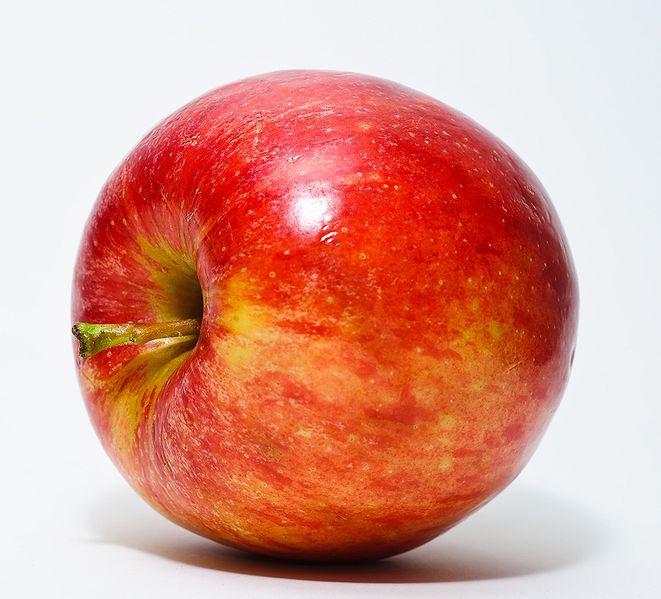
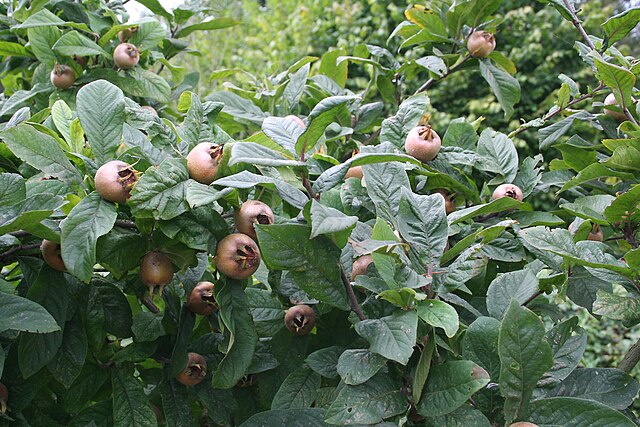
Mespilus germanica, commonly known as medlar, is a small, coarse, rounded tree or large shrub with spiny twisted branching that typically grows to 20 feet tall. It is native primarily to woodland and scrub areas from southeastern Europe to central Asia. Five-petaled, white to pink-tinged flowers (to 2" diameter) appear singly in June. Fruit is a brown pome (1" diameter) with an open end that is crowned by persistant calyces. Immature fruits are hard and inedible.
For zones 5-8. Here is a YouTube video on Medlar Harvest and Bletting.
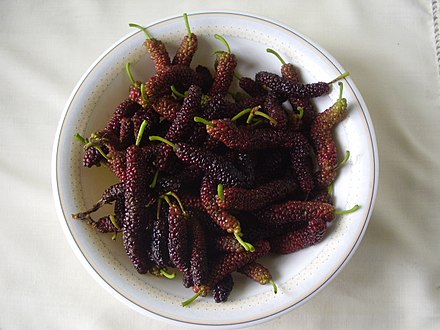
Medium sized spreading tree with a weeping habit, excellent shade tree. Birds love them too so make sure you cover them if you don't want to share.
The Himalayan Mulberry is fairly similar in growth habits and climatic requirements to the black mulberry.
Plants normally grow about 25 feet tall, but have been known to grow as tall as 70 feet, but that is rare. Trees are hardy to about 18-25F. Grows well in zones 6-10.
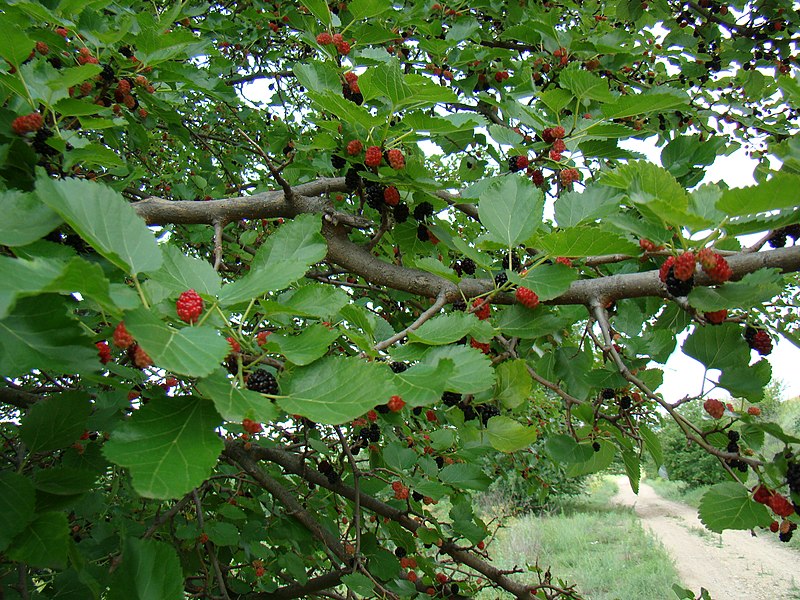 Yuriy75, CC BY-SA 3.0, via Wikimedia Commons
I'ts said that if you like blackberries, then you will love mulberries. No thorns and it is easy to grow your own tree! Each tree produces succulent mulberries that are both delicious and nutritious and offer even more juicy flavor than blackberries.
The fruit grows in abundance from June to August. The berries ripen over an extended period of time, providing a delicous snack all summer.
These tress grow quickly, and in few short years uou can pick baskets full of large, black mulberries so sweet there’s no need for sugar, and mulberry lovers know this fruit is to be prized because its intense flavor is like no other. A lovely specimen tree whose fruit will keep you in jam and wine all winter long. Berries also freeze very well. One of the few trees that actually prefers heavy soil to achieve its lifespan of a hundred years or more.
Grows about 15 feet tall and spreads about 12 feet, does well in zones 4-10.
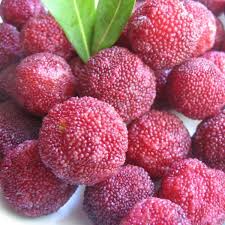
They are also referred to as Chinese bayberry, Japanese bayberry, Yangmei, or Chinese strawberry trees. The fruit is about 1 inch in diameter, with a round, knobby surface that varies form red to purple. The pulp is similar in color with a sweet and tart flavor. Each fruit has a single seed is about 10% of the fruit much like a cherry. The Chinese have been using the seeds, leaves and roots for medicinal purposes for centuries. The bark has also been used as a yellow dye.
The fruit can also be canned, dried, juiced and made into wine. Also known as Yumberry. This fruit has seen a dramatic increase in popularity over the last decade especially in Australia.
Hardy for zones 8 and higher. Does well in subtropical climates but can stand mild freezes.
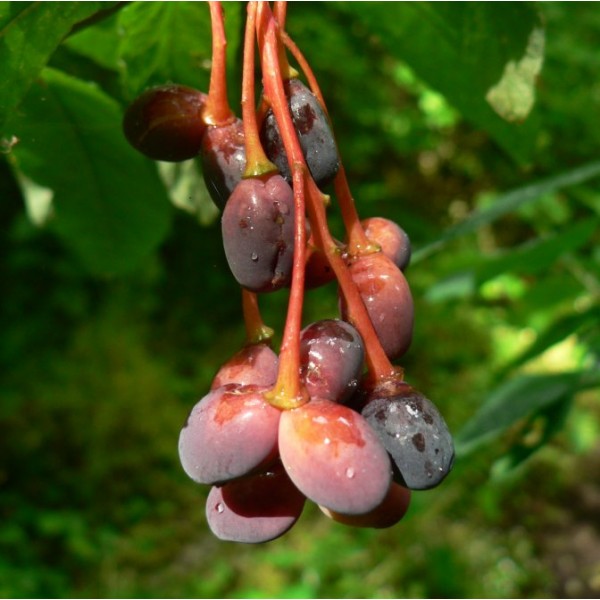
Native Americans ate them, made tea of the bark, and chewed its twigs to use as a mild anesthetic and aphrodisiac. For zones 6-10.
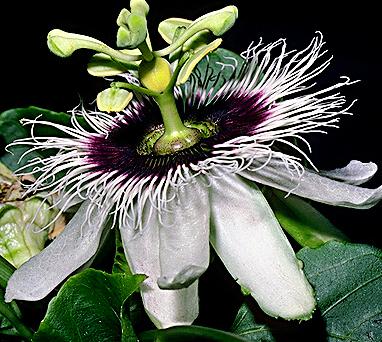
Passion fruit is widely grown throughout the tropics and subtropics. The fruit is produced on a woody vine from bisexual flowers. The fruit is somewhat tart, has a hard purple or yellow rind, and contains many black seeds. Passion fruit is commonly used in beverages. Grow on fences or trellises, or allow it to scramble over shrubs and trees. Can be grown in many zones as an annual plant if started inside in winter and moved outide in spring. Zones 9b and higer it is a perennial.
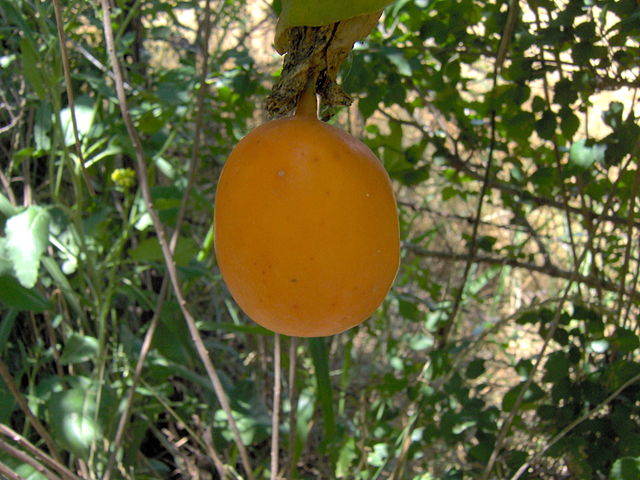
Passion fruit is widely grown throughout the tropics and subtropics. The fruit is produced on a woody vine from bisexual flowers. The fruit is somewhat tart, has a hard purple or yellow rind, and contains many black seeds. Passion fruit is commonly used in beverages. Grow on fences or trellises, or allow it to scramble over shrubs and trees. Can be grown in many zones as an annual plant if started inside in winter and moved outide in spring. Zones 9b and higer it is a perennial.
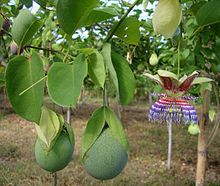
Flowers are greenish-white and purple, huge, up to 4-6 inches in diameter. The sepals are greenish-white, heavily speckled with purple spots inside, green outside. The petals are green white and heavily spotted with purple. The crown consists of four rows of filaments, white with purple stripes. The flowers are pendulous and very fragrant.
The fruits are oval or spherical, about 2 inches long and 2-3 inches wide. They are greenish yellow to light orange and the external shell is extremely hard. They are edible and taste of grapes.
The name maliformis name means "apple-shaped".
Vines are self-fertile, and should be grown on fences or trellises.
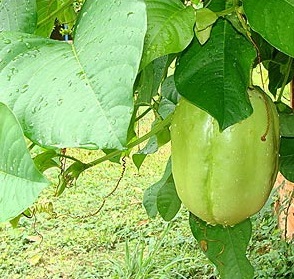
Fruit of the giant granadilla reach a length of up to 12 inches
and turn yellow when mature. The pulp around the seeds is used
to flavor ice cream and to make a cooling drink. In addition,
the flesh of this fruit is edible. The green fruit is boiled
and eaten as a vegetable. The fully ripe flesh is eaten alone
or in combination with such fruits as papaya and pineapple
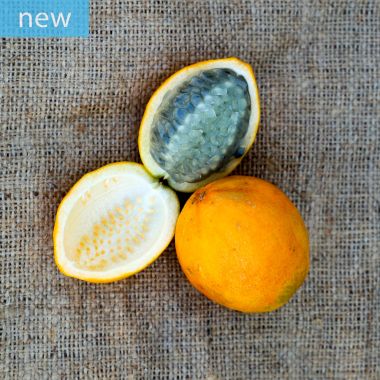
It will easily adapt to being grown in a wide range of tropical and warm temperate climates. We think the Perfect Passionfruit has the potential to become far more popular than Passiflora edulis, which is a common sight in fruit markets worldwide.
The plants do extremely well in containers and are hardy in the landscape in USDA zone 9-11. 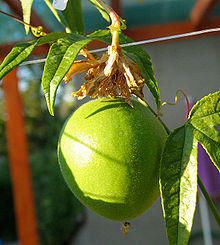
It climbs by means of clinging tendrils and can be kept as an container plant. The long tendrils need lots of support for climbing. It may be grown as a houseplant in a sunny South-facing window. It has large scented flowers, from June to November, with pale lavender petals and purple filaments which are kinked at the tip. These are followed by sweet edible fruits which are yellow when ripe. The leaves are tri-lobed and 15 cm large. Pruning is a must to keep the vine healthy. Prune off less vigorous growth and occasionally prune back vigorous growth to promote flowering.
When established, and without care, the passion fruit can easily overtake other garden plants, shading them from sun. One of the easiest Passiflora to grow and has the best cold hardiness. Keep the atmosphere humid through the Summer and place in full sun, can tolerate partial shade. You may need to water your plants on a daily basis during the hottest Summer months. During the Winter the roots should be kept moist, but as growth will be much slower you will probably only need to water once a week, depending on growing temperature. It will do best in a loam based mix with a little peat moss.
Fertilize at least once every two weeks in the growing season.
If their pot is too large or if they have an unrestricted root run then the whole plant will simply get bigger and bigger but it will refuse to flower and therefore produce the fruits. By limiting the pot size you are limiting the ability to grow and this is seen as a threat, so the natural mechanism is to produce seed for the next generation. A suitably sized pot for an adult plant would generally be of 12 inches in diameter.
Hardiness zone 8-11.
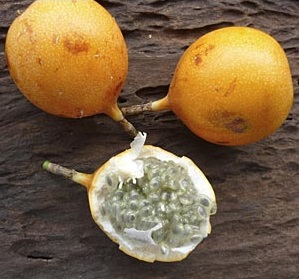
The outer shell is hard and slippery, and has soft padding on the interior to protect the seeds. The seeds, which are hard and black, are surrounded by a gelatinous sphere of transparent pulp. The pulp is the edible part of the fruit and has a soft sweet taste. It is very aromatic and contains vitamins A, C, and K, phosphorus, iron, and calcium.
Winter Hardiness: 25-30° F
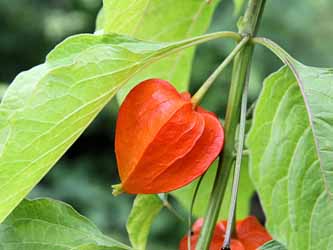
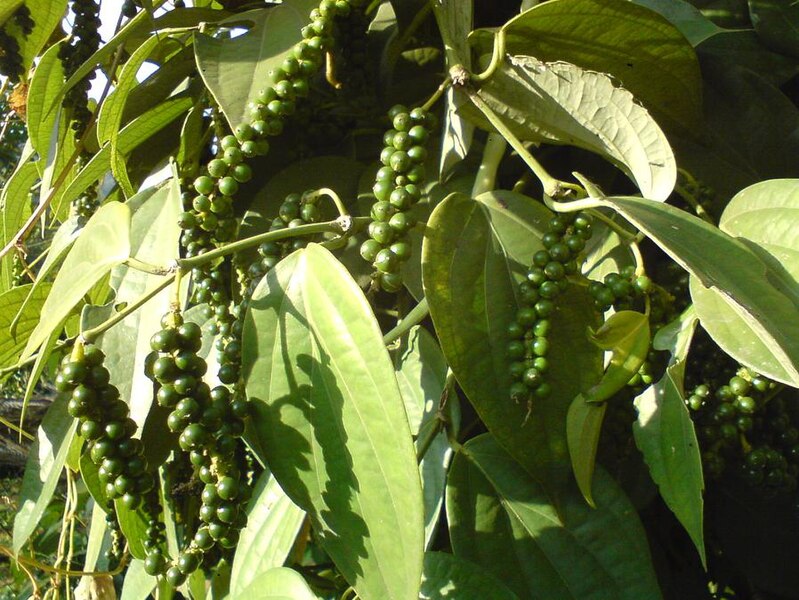
Black pepper plants make an attractive addition to your house or garden. Once grown, they develop dainty white flowers before producing fruit. The fruits will appear as clusters of round berries in a chain formation.
Conditions for growing black pepper plants require high temps, heavy and frequent rainfall, and well-draining soil, all of which are met in the countries of India, Indonesia, and Brazil where most of the commercial peppercorns are grown. Most growers in the USA grow these in containers inside the home or greenhouse. These warm loving plants will stop growing when temps drop below 65 degrees F. (18 C.) and do not tolerate frost; as such, they make great container plants. Situate in full sun with 50 percent or greater humidity, or inside the house or greenhouse if your region does not fit these criteria.
In its native habit of southern India, Black Pepper is an understory plant that climbs up trees and grows in dappled light. When grown as a houseplant, it needs moderate light in an east or west window and it should be placed directly on the windowsill or close to your light source if grown in a light garden. It does benefit from some direct sunlight but not hot noonday sun. Like other tropical plants, Black Pepper can be grown outside during the summer months and brought inside for the winter.
The flowers start growing at the leaf nodes of new growth. The small white flowers form pendulous spikes and then small, round, green peppercorns form in chains, which in time ripen to red. Growth slows down in the winter, yet it will fruit and flower year-round. The pepper plant can produce an abundance of peppercorns in a pot as small as 8-inches.
To fertilize, use a soluble or liquid fertilizer applied every two weeks when you water. Don’t over fertilize your black pepper plant, as a rule of thumb, the less light, the less often you fertilize, so outside in summer means more, inside in winter less.
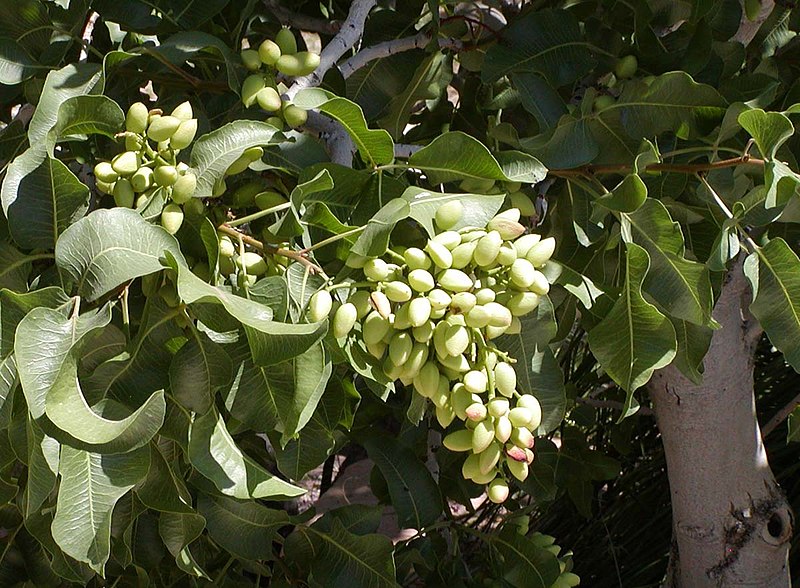
Their green kernels have a distinct and widely-appreciated flavor, making them a popular choice in ice cream, baked goods, salads, and as a snack or dessert nut. These trees are tolerant of saline soil, but require long, hot summers to properly ripen. Commercial production centers include Iran, Turkey, California, and Australia. Try these nutritious nuts today and experience their delicious taste and health benefits for yourself! Zones 8b-10.
Germination: Soak the seed in room temperature water for 24–48 hours. Then roll seed loosely in damp (not wet) burlap, cloth towels, or paper towels and place the towels in plastic bags. Keep refrigerated at 33–36 °F for 6 weeks. After 6 weeks, remove bags from refrigerator and place at room temperature, between 70–90 °F, check seeds for root growth at least every other day and remove seeds from towels as early as possible after observing root growth and plant in light soil media, potting soil, peat pots, or other standard soil mix.
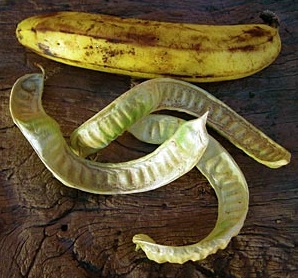
The dried fruits are placed in a blender and the resulting flour is sifted and added to desserts, pastries, soups and even ice-cream. The dried pods are also nibbled on as a delightful snack. These trees are beneficial as Nitrogen fixers. They grow quickly and are extremely hardy. The variety offered here is one of the larger fruited forms from the Atacama desert in Chile.
In cultivation, Prosopis chilensis can take moderate freezes and severe droughts and can be grown in dry climates of USDA zones 8 to 10.
Seeds are easy to sprout but need to be scarified and soaked before sowing.
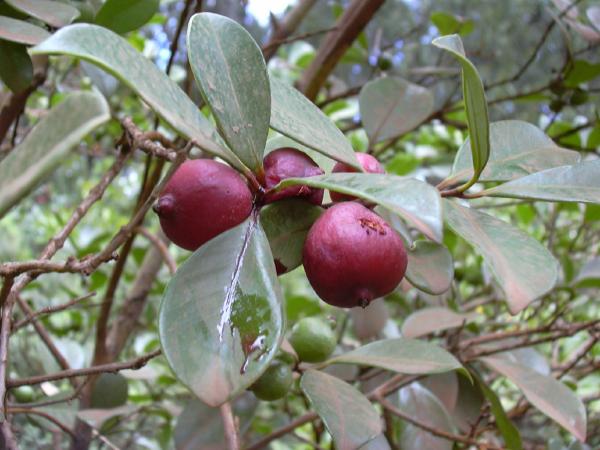
This guava does well in limestone and poor soils that would barely support other fruit trees. It is shallow-rooted but is fairly drought tolerant.
A delicious puree or tart-filling can be made by trimming and cooking 6 cups of red cattleys with 1 cup water and 2 cups granulated sugar and pressing through a sieve.
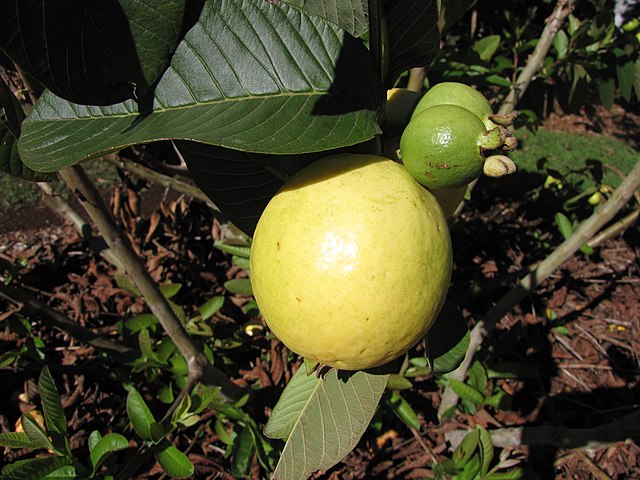
Highly fragrant fruit usually with green or yellow skin, about the size of a baseball, with pink or white flesh. The guava is one of the most common fruits in the world and its sweet pulp is used in a wide assortment of drinks, desserts, and other food products.
Hardiness: The guava is highly adaptable to tropical and subtropical environments and can be grown outdoors as far North as the San Francisco Bay Area in California, as well as most areas of Florida and gulf coast states. Protect from temperatures below 30F, which can cause defoliation. Harder freezes will kill the plant. In cool winter areas, guava's may partially defoliate, but should begin new growth flushes in spring and summer.
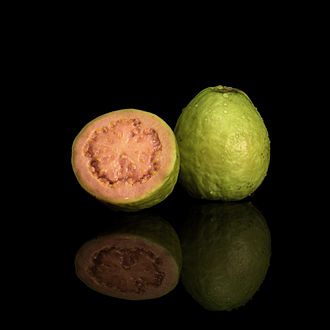
When cultivated from seed, guavas are notable for their extremely slow growth rate for several months, before a very rapid acceleration in growth rate takes over. From seed, common guavas may bloom and set fruit in as few as two years or as many as eight. Cuttings, grafting, and air layering are more commonly used as a propagation method in commercial groves. Highly adaptable, guavas can be easily grown as container plants in temperate regions, though their ability to bloom and set fruit is somewhat less predictable.
The plant is used in many different shampoo products for its scen. It is also becoming a popular bonsai species and is currently quite popular in India and Eastern Asia. Guava wood from Hawaii is commonly used for the smoking of meat. The wood is resistant to insect and fungal attack.
Hardy down to 28 degrees, but may lose foliage at this temperature, easily grown in containers.
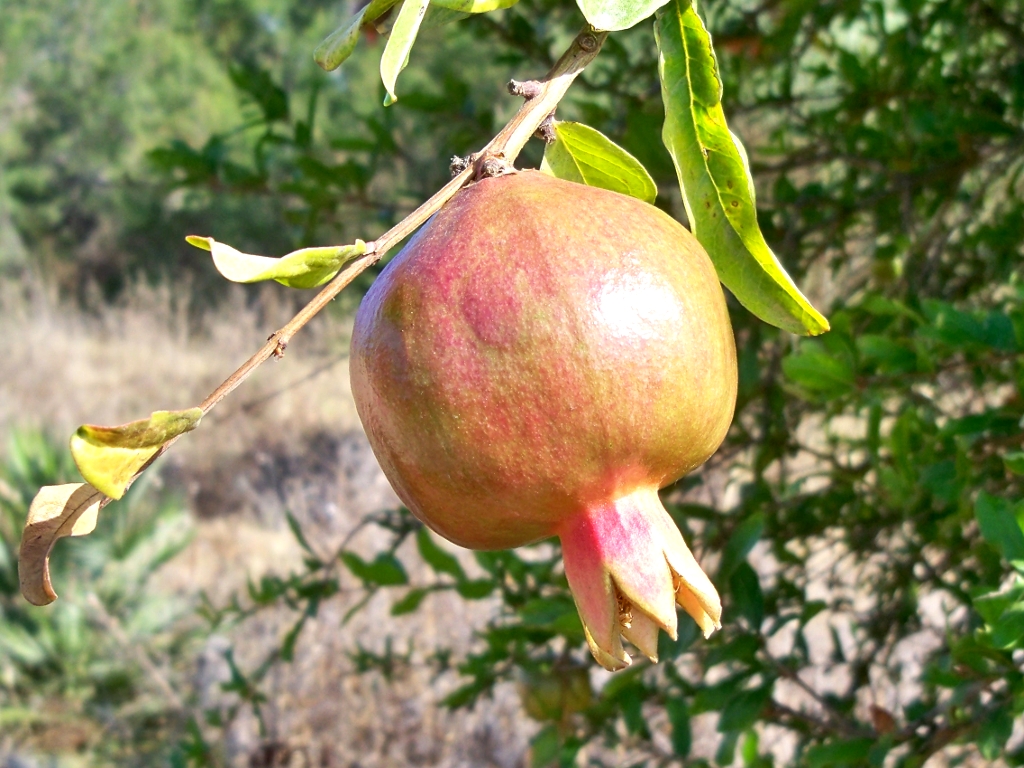
Pomegranates are adaptable to many soil types, though they grow best in loamy soil with good drainage. The ideal climate is zones 7 to 12, with short, mild winters and low humidity. They may be grown in containers in colder places, and kept indoors or in a greenhouse over winter.
It is not necessary to prune your pomegranate trees, but it can help with ease of harvest, better fruit, and for a shapelier tree. Pomegranates naturally grow in bush-form, and produce lots of suckers. This is ideal for hedges or living walls, but not for most other situations.
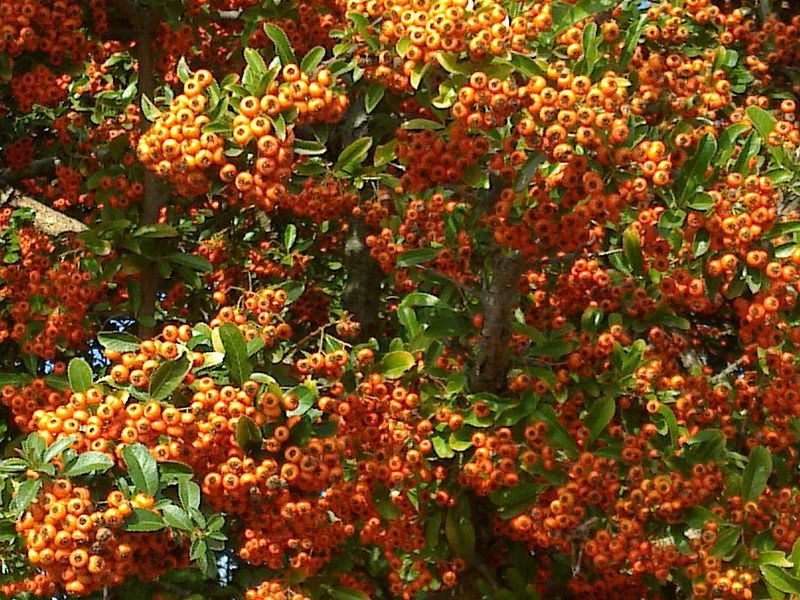
Birds love the fruit. They are greatly favored by Black Birds and Cedar Waxwings, which have been know to strip a tree of all its berries.
Here is a link to a great web page about Firethorn and includes a recipe for Pyracantha Jelly.
Light: Full sun preferred but will grow in partial to fairly heavy shade. Flowering and fruiting will not be as heavy.
Moisture: Moist to very dry, well drained soil. Hardiness: Zones 5 - 9.
Usage: Pyracantha is often used as an espalier. Held flat against a wall, it can be shaped quite creatively. Because of its fast growth rate, sprawling, spreading habit, and ease of care, it can be used on slopes to great advantage requiring little maintenance or care. The wide-reaching stems may be pruned back as needed during warm weather as the shrub blooms on old wood. Even consider using it as an informal hedge! This will require some trimming and shaping for the first few years but the effort will produce impressively beautiful and secure
(thorny) hedges.
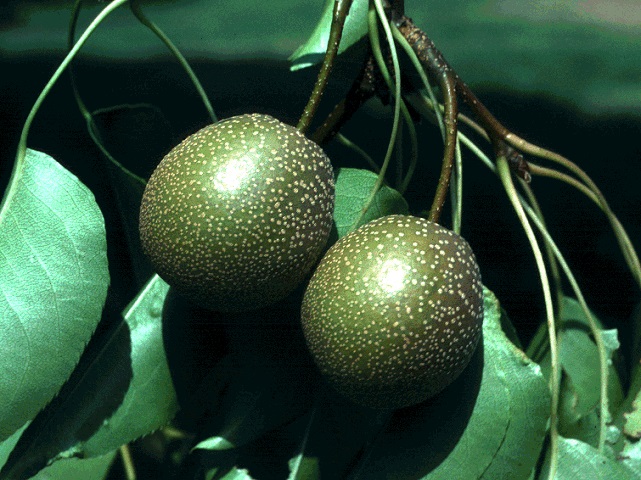
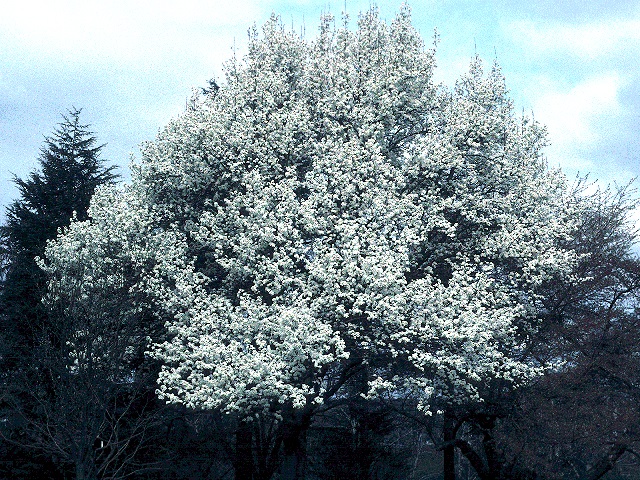
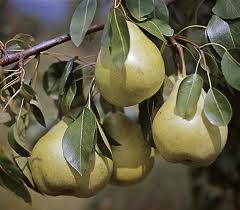
Common Pear grows best in a cooler climate and requires some winter chilling to bear fruit. This tree is a descendant of wild pears categorized as P. communis subsp. pyraster and P. communis subsp. caucasica. It is a tree of historical significance, with archaeological evidence showing its cultivation dating back to the Neolithic and Bronze Age. Common pears are best picked before ripening, and they store well when kept cold. Fermented pear juice is called perry, and in Britain, the place name "Perry" indicates the historical presence of pear trees. The European Pear is an exceptional fruit that has played an important role in human history, used for food, drink, and more.
For zones 5-8.
It is hardy to zone 6 and is not frost tender. It is in flower in April, and the fruit ripens in September. The flowers are hermaphrodite (have both male and female organs) and are pollinated by Insects.
Suitable for: light (sandy), medium (loamy) and heavy (clay) soils, prefers well-drained soil and can grow in heavy clay soil. Suitable pH: acid, neutral and basic (alkaline) soils. It can grow in semi-shade (light woodland) or no shade. It prefers moist soil and can tolerate drought. It can tolerate atmospheric pollution.
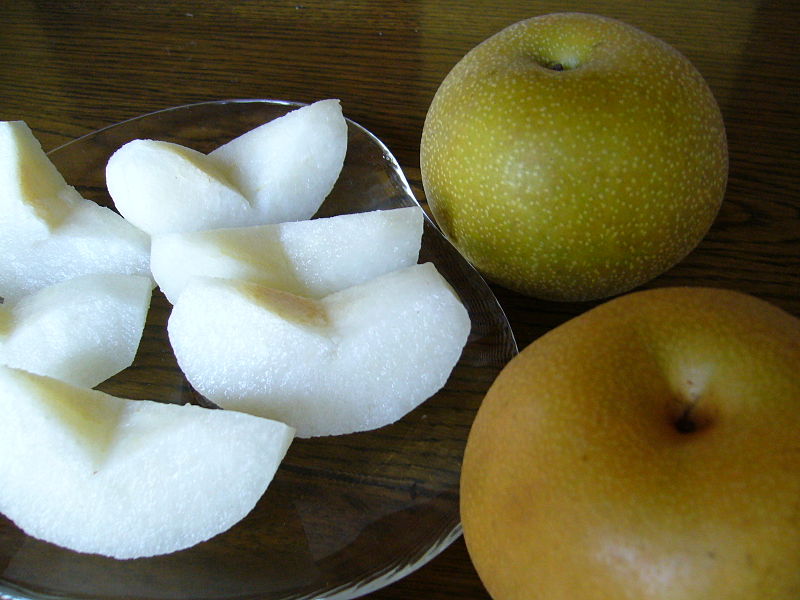
Asian pears are cousins to the pears that are typically seen in grocery stores, but this fruit is similar to an apple and its many names reflect that characteristic. Other names that this fruit goes by are: Chinese pear, Japanese pear, Sand, Nashi, and apple pear.
Asian pears differ from the traditional European ones. These pears are usually round, firm to touch when ripe, and are ready to eat after harvest. Asian pears reach prime quality when they ripen on the tree, like an apple and peach. These pears will be crisp, juicy, and slightly sweet with some tartness, especially near the core.
Note: These seeds will require cold stratification, you may need to purchase our Cold Stratification Kit 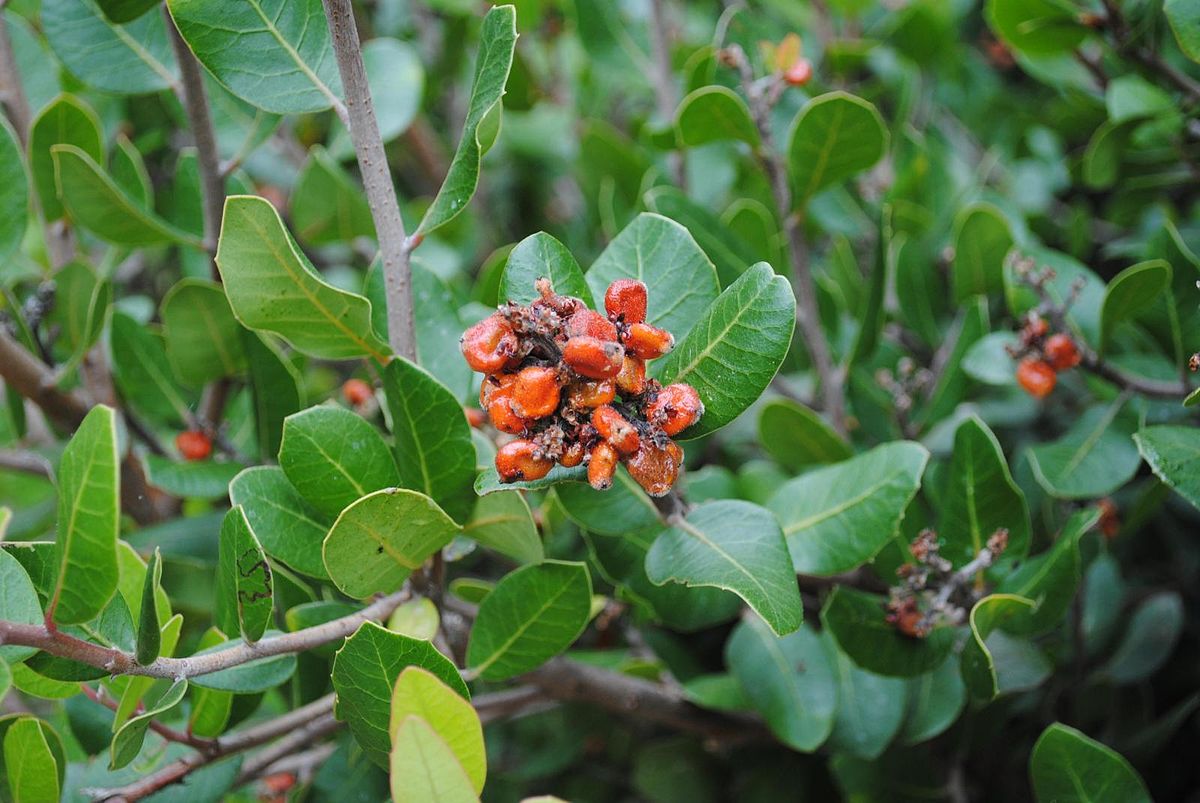
Rhus integrifolia can also be used as a landscape shrub and is suitable for hedging and espalier. The plant is vulnerable to frost, but often the plant will regrow by summer, after it appears to have died from cold.
The small flowers, in tightly grouped clusters, are white to rose-pink in color and bloom at the tips of branches from February to May. The fruit is a sticky, flattish drupe that is covered with a fine reddish-brown down, inside of which is a hard stone of a seed about 1/4 inch long. Plant in full sun to light, or even dense shade. It is drought tolerant once established and cold hardy to 10°F.
It can also be kept smaller by regular light pruning and can even be trained as a formal hedge. If this plant becomes too big or too lanky, give it a hard pruning, even to the ground in late winter, and this plant will resprout new shoots rapidly.
Use care when pruning as this sumac relative has sap that can cause a rash. Lemonade Berry is found growing naturally below 2,600 feet in coastal sage scrub and chaparral on dry, mostly open-facing slopes from Santa Barbara county to Baja.
The sticky substance covering the fruit tastes like bitter lemons, which gives the plant its name.
The berries are edible and can also be used for lemonade. Lemonade berry is also good for erosion control. The fruit is consumed by roadrunners and many upland gamebirds, songbirds, large and small mammals. Also provides a special value to native bees.
Medicine: Tea made from the stems can be used to treat coughs. The tea made from the bark, berries, or leaves steeped in cold water can be gargled for sore throats and cold sores, or you can drink it to alleviate diarrhea or urinary problems (best to use leaves for the latter). Best suited for zones 8-10.
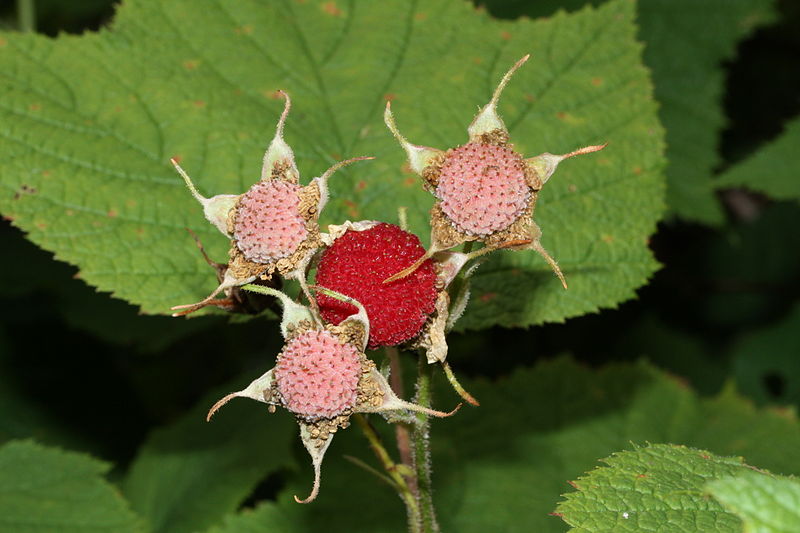
Thimbleberries are good subshrubs for use as streamside erosion control. It forms thornless bramble thickets with good soil-binding attributes. Because it is vigorous and adapts well to sun or shade, it makes a fine native species for re-vegetating disturbed moist areas, especially those spots located in shade.
The raspberry-like fruit make tasty jams, jellies and syrups.
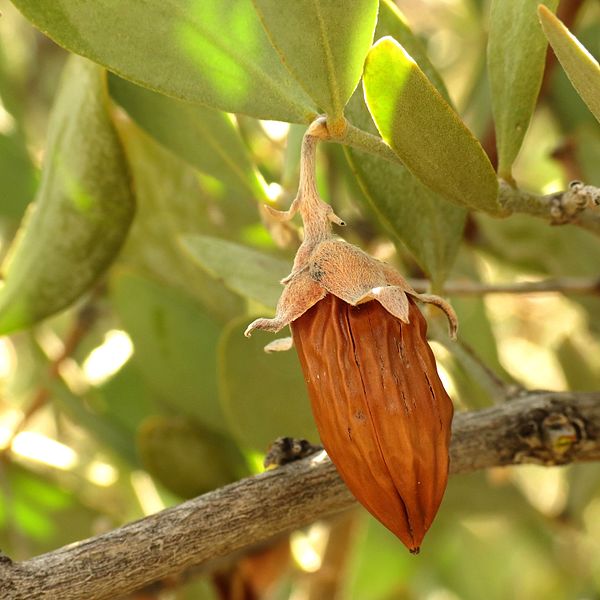
This woody, evergreen shrub grows up to 8 feet tall and about 10 feet wide with leathery, grayish-green leaves. Jojoba occurs throughout the Sonoran Desert where annual average rainfall exceeds 5 inches. It extends beyond the desert into the coastal mountain ranges of southern California. Use jojoba plants as a screen, barrier, hedge, or desert revegetation.
Zones 9-11 or can be container grown in cooler zones.
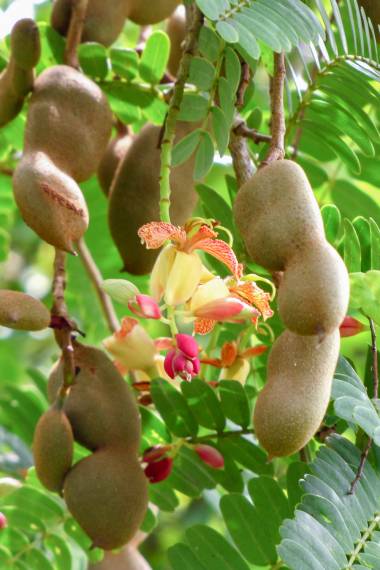
Tamarinds are grown as ornamental shade and street trees, and
for the edible pods. The pods are fed to livestock, and the
pulp within the pods is used to make beverages, curries,
chutneys and sauces. Tamarind pulp is made into a soft drink
known as refresco de tamarindo in Latin America, and tamarinade
in Jamaica. It's also the basis of a popular drink in the
Middle East. Tamarind is used extensively in Indian and
Southeast Asian cuisine, and is an important ingredient in
Worcestershire sauce. The juice is used to pickle fish in
India. Several medicinal uses of tamarind are reported in
Grieve's A Modern Herbal. The fruit is said to improve
digestion, relieve gas, soothe sore throats, and act as a mild
laxative.
The tamarind tree is a beautiful, fine textured tree and it
makes an excellent shade tree in large landscapes. It often is
planted in public parks and as an avenue tree in tropical
cities. Best for zones 10 and up.
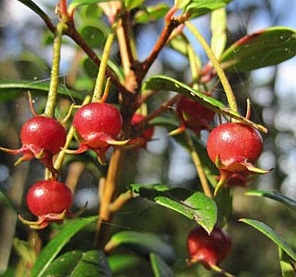
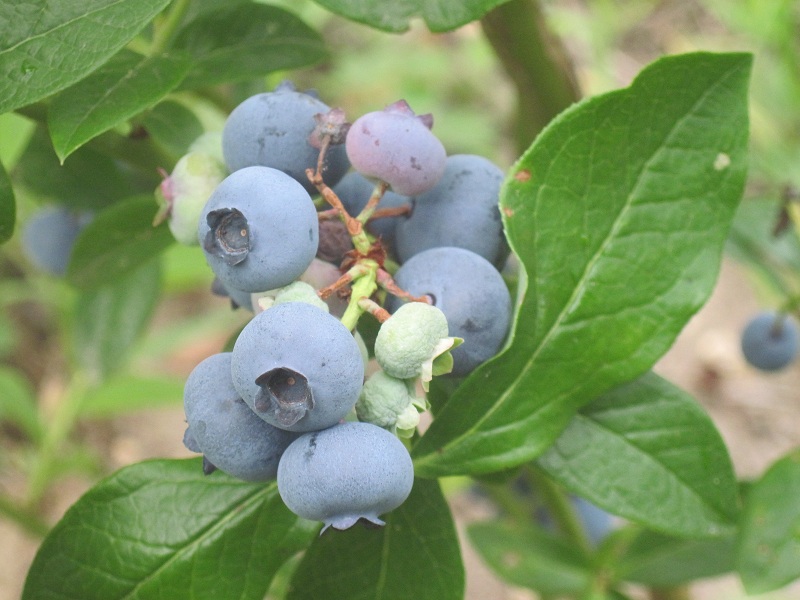
Germination instructions are not on seed packets, click here for germination instructions.
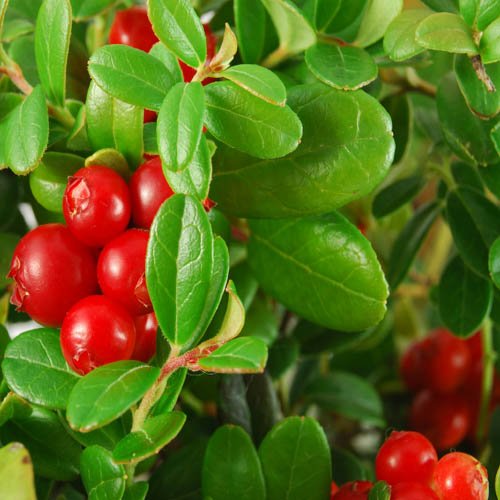
Cranberries are native to North America do not need to be grown in a bog. Cranberries do require some soil preparation that is well worth the effort.
Cranberry plants can also be grown in large pots as ornamentals. These attractive, spreading plants are a unique addition to any garden.
With proper care, you can harvest berries the first year from the cranberry plants.
Zones 2-8 if grown outside.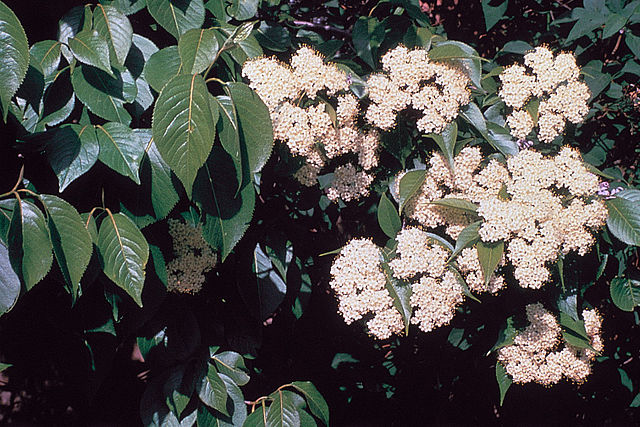
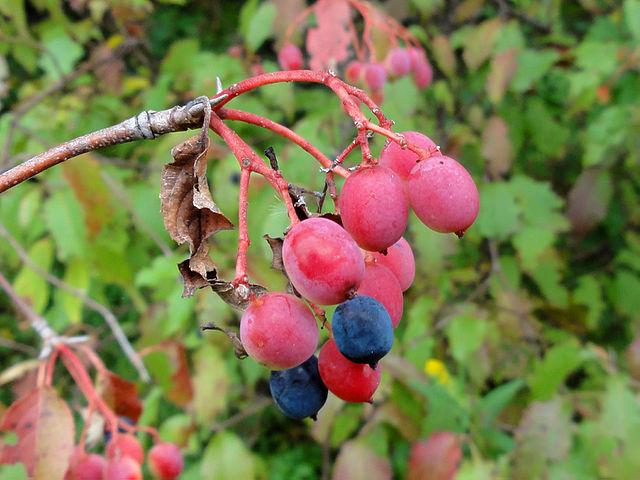
Viburnums offer excellent support for birds and pollinators, and serve as host plants to numerous butterflies and moths. They tend to flower profusely whether or not pollination occurs. However, poor fruiting will happen if there is only one Viburnum available, so try to grow at least two somewhat close together. The edible berries can be used to make jams and jellies.
It can grow 15 to 20 feet tall and should be spaced about 15 feet apart. Hardy for zones 2-8.
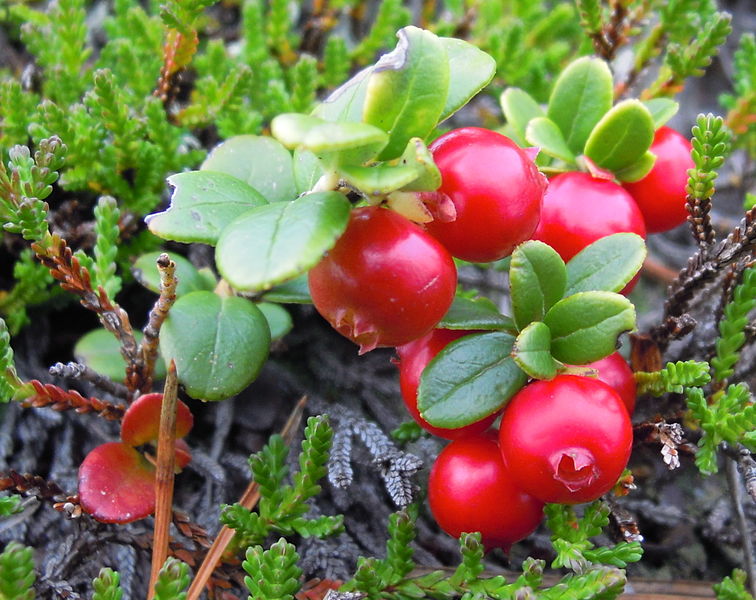
Mountain Cranberry is a short evergreen shrub in the heath family that bears edible fruit, native to boreal forest and Arctic tundra throughout the Northern Hemisphere from Eurasia to North America. Lingonberries are a staple in Northern Scandinavia, picked in the wild and used to accompany a variety of dishes.
Hardy for zones 2-7.
Germination instructions: Sow at soil temperuture of 41°F or lower, needs to planted in cold soil, the warming soil triggers germination, germination irregular, often several months.
Average Germ Time: 6-12 weeks. Light Required: Yes.
Depth: 1/8-1/4 inch. Sowing Rate: 4 - 5 seeds per plant.
Moisture: Keep seeds moist until germination. Plant Spacing: 18-24 inches.
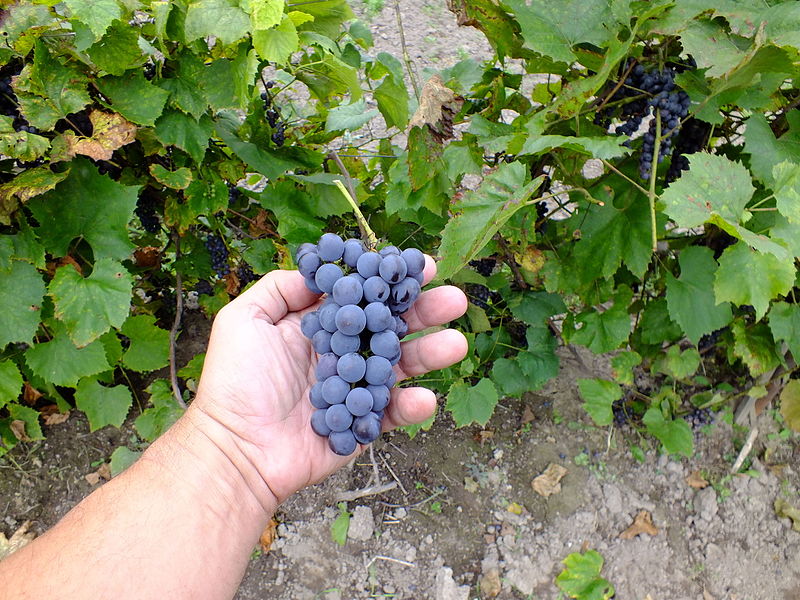
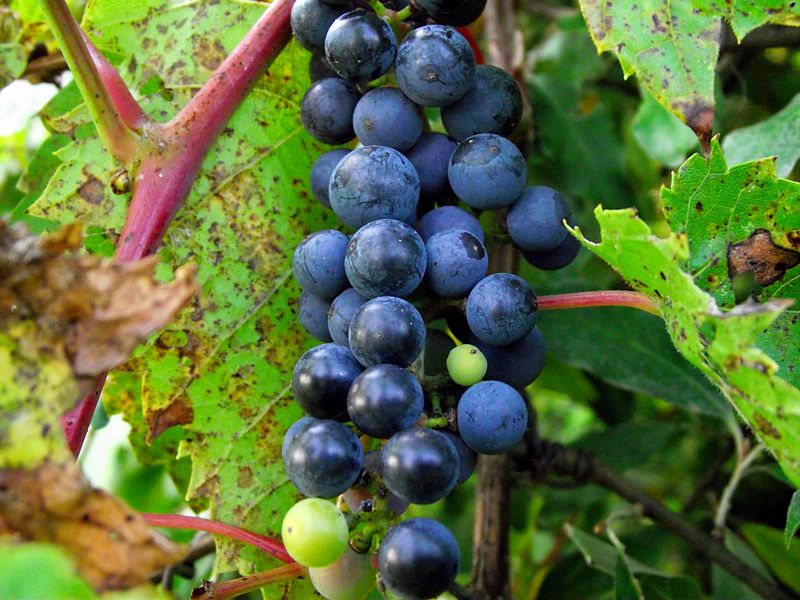
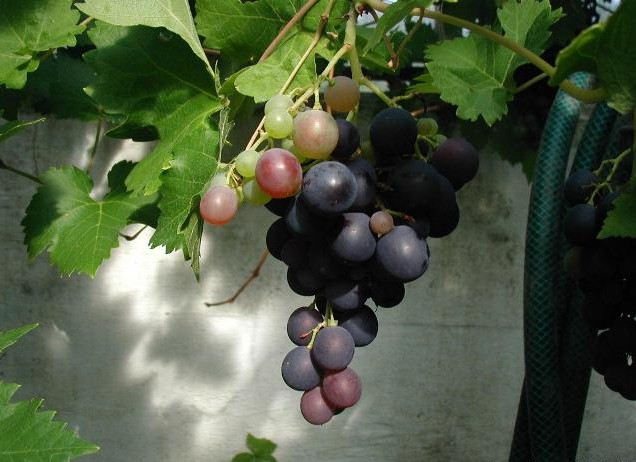
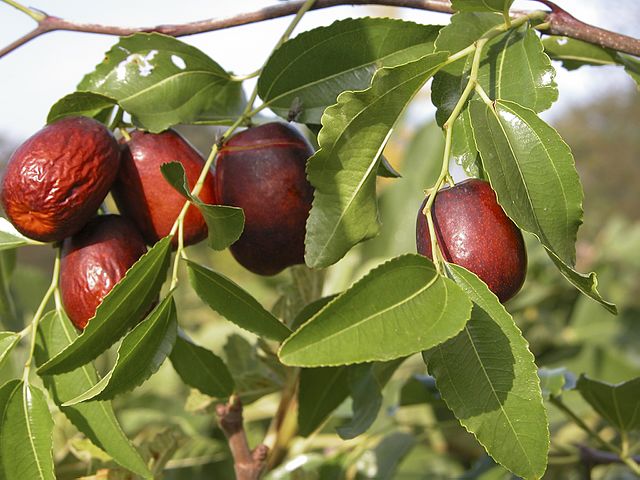
Jujube grows throughout most of the southern half of North America. For best crops, the tree needs a long growing season and hot and dry weather during ripening. About the only parts of the United States where jujube can't grow are in the North (USDA Zones 5 and colder) and the Gulf Coast where summer rain and humidity prevent optimum fruiting.
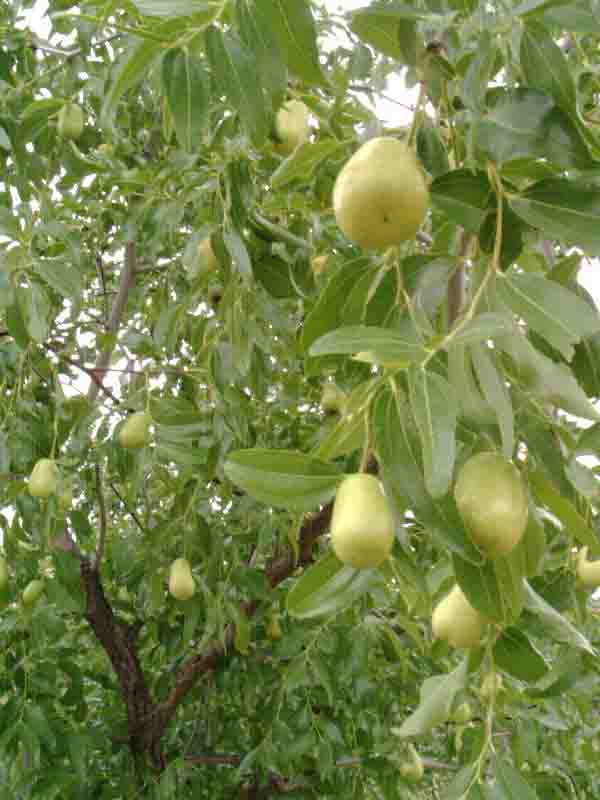
Deciduous shrub growing up to 5m with green oval leaves. The basis of their stalks is thorny. Yellow-greenish flowers in spring and summer. Typical yellow edible fruit.
It adapts to any types of soils. Can be seen on the edge of Oak groves and Cork oak plantations shaping thorny hedges.
A medium sized African tree that is highly versatile and prized in its native range. The fruits are edible and have a sweetish flavor similar to the common Jujube. The tree is also a source of honey and a flavoring for alcoholic drinks. Some believe the tree to be the source of Christ's Crown of Thorns, hence its common name. For zones 6-10.

Serving gardeners since 1992
State of Mississippi Seedmen's Permit #C-391, Ohio 90152, Minnesota 20086777


.jpg)


.jpg)


.jpg)

.jpg)


.jpg)


.JPG)

_Lang_Cl_J_Weber_02_(23566768862).jpg)